

 24 August, 2026
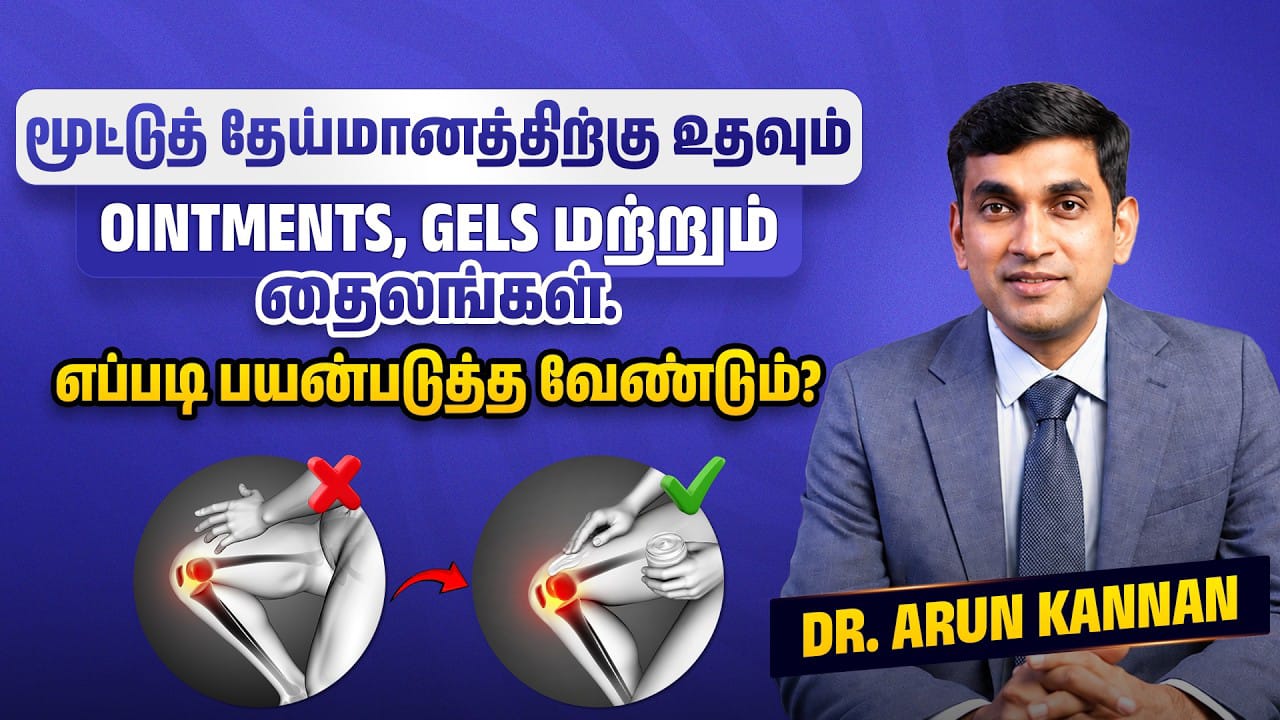
Best Creams, Gels and Oils for Knee Arthritis Pain: What Works, How to Use Them and What to Avoid
Knee osteoarthritis is one of the most common causes of knee pain, particularly in people over the age of 50. As the condition progresses, patients often experience pain while walking, climbing stairs, getting up from a chair or performing other everyday activities.
Because many patients want to avoid taking pain tablets frequently, one of the most common questions is:
“Which cream, gel, spray or oil is best for knee arthritis pain?”
There are numerous products available—from medicated pain-relief gels and cooling sprays to traditional oils and massage preparations. However, they do not all work in the same way, and importantly, none of these topical treatments can regrow damaged knee cartilage.
Their primary role is pain management.
In this article, Dr. Arun Kannan, Orthopaedic Surgeon at Apollo Hospitals, Chennai and Jayam Knee Clinic, Kodambakkam, explains how topical treatments work, which ingredients have a stronger scientific basis, how they should be used and what precautions patients with knee arthritis should follow.
What Is Knee Osteoarthritis?
Knee osteoarthritis is a degenerative condition in which the smooth cartilage covering the ends of the bones inside the knee gradually becomes damaged.
Healthy cartilage allows the joint surfaces to move smoothly with minimal friction.
As osteoarthritis progresses:
- Cartilage becomes thinner
- The joint surface becomes rougher
- Friction increases
- The underlying bone experiences greater stress
- Inflammation may develop
- Pain and stiffness may increase
Patients may also notice:
- Clicking or grinding
- Difficulty climbing stairs
- Pain after prolonged walking
- Difficulty standing from a low chair
- Reduced knee movement
- Swelling
- Progressive bowing of the legs in advanced disease
Knee Arthritis Pain Is Often Activity-Related
One typical feature of early and moderate knee osteoarthritis is activity-related pain.
A person may feel reasonably comfortable while sitting but experience pain while:
- Walking
- Climbing stairs
- Getting up from a chair
- Squatting
- Standing for long periods
- Walking uphill
- Performing repetitive activities
This happens because these activities increase the mechanical load passing through the damaged knee joint.
What Are the Main Goals of Knee Arthritis Treatment?
Treatment generally has two broad objectives.
1. Protect the Joint and Maintain Function
This may involve:
- Appropriate exercises
- Weight management
- Muscle strengthening
- Activity modification
- Avoiding unnecessary high-impact activities
2. Control Pain
Pain relief helps patients remain mobile and independent.
Options may include:
- Topical gels
- Oral medication
- Physiotherapy
- Injections in selected patients
- Exercise
- Bracing where appropriate
- Surgery in advanced cases
The best results usually come from a multimodal approach, rather than relying on one treatment alone.
Why Are Pain-Relief Gels Commonly Used for Knee Arthritis?
For a superficial joint such as the knee, topical medications can deliver an active drug through the skin into the tissues around the painful area.
One of the most widely used ingredients is:
Diclofenac
Diclofenac belongs to a group of medicines called non-steroidal anti-inflammatory drugs, or NSAIDs.
It helps reduce inflammation and pain.
Diclofenac can be given as:
- Tablets
- Capsules
- Injections in certain settings
- Gels
- Creams
- Topical solutions
For knee osteoarthritis, topical diclofenac is commonly considered before regular oral NSAID use, particularly in patients for whom reducing whole-body exposure to pain medication is desirable.
How Does Diclofenac Gel Work?
When diclofenac gel is applied over the painful knee, the medicine passes through the skin and reaches tissues beneath the application area.
It can help reduce local inflammatory activity and therefore reduce pain.
The important advantage is that the medication is concentrated more locally around the treated area, while the amount circulating throughout the bloodstream is generally much lower than with oral diclofenac.
This is why topical treatment can sometimes provide useful pain relief with fewer systemic effects than regularly taking an NSAID tablet.
Is Diclofenac Gel Safer Than Pain Tablets?
For many patients, topical NSAIDs can reduce exposure of the stomach, kidneys and cardiovascular system to the drug compared with regular oral NSAID use.
This can be particularly useful in older adults.
However:
Topical does not mean completely risk-free.
Diclofenac can still be absorbed into the bloodstream.
Patients should use it cautiously if they have:
- Significant kidney disease
- Previous stomach ulcers
- Heart disease
- Severe liver disease
- NSAID allergy
- Asthma triggered by aspirin or NSAIDs
- Treatment with blood-thinning medicines
If you use topical diclofenac regularly or over large areas, discuss it with your doctor.
Why Doesn’t Diclofenac Gel Work Immediately?
One of the most common mistakes is expecting a medicated arthritis gel to work like an instant pain-relief spray.
A patient may apply the gel once and say:
“I used it for an hour and nothing changed.”
But topical diclofenac is generally more useful when it is used regularly and correctly.
It may take several days of consistent use before the patient notices the full benefit.
Depending on the formulation, treatment may be applied several times a day.
Always follow the instructions for the specific product or the advice given by your doctor.
Do not automatically apply every topical medicine three or four times daily because different formulations have different recommended dosing schedules.
Consistency Matters More Than One-Time Application
Topical arthritis treatment should generally be thought of as:
Regular pain management rather than instant rescue treatment.
Applying a small amount only when the knee becomes extremely painful may not provide the same benefit as consistent use during a symptomatic period.
This is different from certain cooling sprays used after a sports injury, which may temporarily reduce pain sensation almost immediately.
What Is Capsaicin?
Another topical ingredient used for pain management is capsaicin.
Capsaicin is the compound responsible for the hot or burning sensation associated with chilli peppers.
When applied repeatedly to the skin in an appropriate medical preparation, capsaicin acts on nerve endings involved in transmitting pain.
Over time, these nerves become less responsive to pain signals.
Does Capsaicin Give Immediate Pain Relief?
Usually not.
Capsaicin tends to work gradually.
During the first few applications, patients may actually experience:
- Warmth
- Burning
- Tingling
With repeated use, this sensation often reduces and pain relief may gradually improve.
Because capsaicin can strongly irritate sensitive tissues, it is particularly important to:
- Wash your hands after use
- Avoid touching your eyes
- Avoid applying it near the mouth
- Avoid broken skin
What Is Menthol and How Does It Help?
Menthol is another common ingredient in topical pain-relief products.
It creates a cooling sensation on the skin.
This cooling effect stimulates sensory receptors and can temporarily change the way the nervous system perceives pain.
Compared with capsaicin, menthol may provide a more immediate sensation of relief.
However, it mainly alters pain perception and does not repair damaged cartilage.
Diclofenac vs Capsaicin vs Menthol: What Is the Difference?
These ingredients work differently.
Diclofenac
Primarily reduces local inflammation and pain.
Capsaicin
Gradually reduces the sensitivity of pain-transmitting nerve endings.
Menthol
Creates a cooling counter-irritant effect that can provide temporary symptomatic relief.
Some commercial products contain more than one active ingredient.
However, combining products unnecessarily can increase skin irritation.
Can You Use Multiple Pain Gels Together?
Generally, avoid layering several medicated gels over the same area unless your doctor specifically recommends it.
For example, applying:
- Diclofenac
- Capsaicin
- Menthol
- Another pain balm
all at the same time may irritate the skin without producing additional meaningful benefit.
Choose an appropriate treatment and use it correctly.
Are Traditional Oils Helpful for Knee Arthritis?
Traditional massage oils are commonly used for knee pain.
Examples include:
- Coconut oil
- Sesame oil
- Herbal oils
- Other massage preparations
Patients may feel better after applying warm oil and gently massaging the knee.
This relief may occur because:
- Massage stimulates sensory nerve endings
- Mild warmth can relax surrounding muscles
- Touch and massage may temporarily reduce pain perception
Therefore, there is nothing inherently wrong with gentle oil massage if it feels comfortable and does not irritate the skin.
Can Oil Enter the Knee Joint and Lubricate It?
No.
This is an important misconception.
Oil applied to the skin does not travel through the tissues and enter the knee joint in a way that “lubricates” the cartilage.
Similarly, massage oils do not:
- Replace lost joint fluid
- Rebuild cartilage
- Reverse arthritis
- Grow new cartilage
Their benefit is primarily symptomatic and superficial.
Can Any Cream or Oil Regrow Knee Cartilage?
No topical cream, gel or oil has been proven to regrow worn-out knee cartilage.
This is one of the most important messages for patients.
Products claiming to:
- Rebuild cartilage
- Restore lost cushioning
- Permanently reverse arthritis
- Lubricate the joint from outside
should be approached cautiously.
Topical therapies can reduce pain.
They cannot reverse structural osteoarthritis.
Can Topical Gels Stop Arthritis From Progressing?
Topical pain medicines mainly control symptoms.
They do not reliably stop the underlying degenerative process.
Long-term knee protection requires attention to other factors such as:
- Weight
- Muscle strength
- Activity pattern
- Joint alignment
- Severity of arthritis
How Should Diclofenac Gel Be Applied?
Follow the instructions on your prescribed product, but general principles include:
- Apply the recommended amount over the painful area.
- Spread it gently over the skin.
- Avoid aggressive massage over an inflamed joint.
- Wash your hands after application unless your hands are the treatment area.
- Avoid eyes, mouth and other sensitive areas.
- Use only on intact skin.
- Do not apply more frequently than recommended.
Different diclofenac products have different concentrations and dosing schedules.
Therefore, follow the specific product instructions rather than relying on a universal dose.
Should You Apply a Heating Pad After Pain Gel?
Generally, avoid placing strong heat directly over a recently applied medicated gel unless the product instructions specifically allow it.
Heat may:
- Increase skin irritation
- Increase absorption
- Intensify the effects of ingredients such as capsaicin or menthol
If you have used a hot compress, allow the skin to return to a comfortable normal temperature before applying a topical medication.
Can You Apply Pain Gel on Cuts or Scratches?
No.
Do not apply topical pain medicines over:
- Cuts
- Scratches
- Open wounds
- Rashes
- Infected skin
- Severely irritated skin
Doing so can cause burning and additional irritation.
Why Should You Wash Your Hands After Applying Pain Gel?
Ingredients such as capsaicin and menthol can cause significant irritation if transferred to:
- Eyes
- Nose
- Mouth
- Genital area
After applying a topical medication, wash your hands thoroughly with soap and water unless you are treating your hands.
Should You Cover the Gel With a Tight Bandage?
Usually, no.
Do not tightly wrap the treated area unless specifically instructed.
Occlusive dressings can alter how much medicine is absorbed and may increase skin reactions.
Can You Use Diclofenac Gel Every Day?
Some patients use topical diclofenac regularly for periods of symptomatic knee osteoarthritis.
However, persistent daily pain should not simply be managed indefinitely without assessment.
If you require pain medication every day for weeks or months, your knee should be evaluated to determine:
- Stage of arthritis
- Joint alignment
- Muscle strength
- Whether physiotherapy is needed
- Whether another treatment would be more appropriate
What Side Effects Can Topical Pain Gels Cause?
The most common side effects are local skin reactions.
These can include:
- Redness
- Itching
- Burning
- Dryness
- Rash
- Irritation
Stop the product and seek medical advice if you develop a significant skin reaction.
Serious whole-body side effects are less common with topical treatment than with oral NSAIDs, but they remain possible.
Who Should Be Especially Careful With Diclofenac?
Discuss regular use with your doctor if you have:
- Chronic kidney disease
- Heart disease
- Previous stroke
- Stomach or intestinal ulcers
- Significant liver disease
- Bleeding disorders
- NSAID-sensitive asthma
- Pregnancy
- Treatment with anticoagulants or certain other medicines
Can Older Adults Use Topical Diclofenac?
Topical NSAIDs are frequently useful in older adults because many older patients have conditions that make repeated oral pain tablets undesirable.
However, older patients often take several medications and may have kidney or heart disease.
Therefore, even topical medicines should be reviewed if they are being used regularly.
Are Cooling Sprays the Same as Diclofenac Gel?
Not necessarily.
Cooling sprays often create an immediate cold sensation that temporarily reduces pain perception.
Diclofenac is an anti-inflammatory medicine.
A product can sometimes contain both pain medication and counter-irritant ingredients, but their mechanisms are different.
Do not assume every spray or gel contains the same medication.
Read the active ingredients.
What Is the Best Treatment for Early Knee Arthritis?
For most patients, one cream or tablet is not the complete treatment.
Early knee osteoarthritis is usually managed with a combination of strategies.
1. Exercise
Strengthening the muscles around the knee—particularly the quadriceps—can improve joint support.
Appropriate exercises may help:
- Reduce pain
- Improve mobility
- Improve balance
- Maintain independence
2. Weight Reduction When Needed
If you are overweight, even modest weight loss can reduce the mechanical load passing through the knees during everyday activities.
Weight management is one of the most important long-term strategies for knee osteoarthritis.
3. Activity Modification
Certain activities place substantially greater strain on the knee.
Patients with symptomatic arthritis may benefit from reducing:
- Deep squatting
- Repeated stair climbing
- Sitting on the floor
- Frequent kneeling
- Steep hill climbing
- High-impact activities
This does not mean becoming inactive.
The goal is to stay active while reducing unnecessary joint stress.
4. Physiotherapy
A physiotherapist can help improve:
- Quadriceps strength
- Hip strength
- Knee movement
- Walking pattern
- Balance
- Functional ability
5. Pain Management
This may include topical treatment first in appropriate patients.
Other options may be considered if symptoms remain significant.
6. Injections
Some patients may benefit from selected knee injections depending on:
- Severity of arthritis
- Symptoms
- Age
- Previous treatment
Injections should not automatically be given to every arthritis patient.
7. Surgery
When knee arthritis becomes advanced and causes significant limitation despite appropriate non-surgical treatment, surgical options—including knee replacement—may eventually be considered.
When Should Knee Pain Be Evaluated by an Orthopaedic Surgeon?
Consult an orthopaedic specialist if you have:
- Persistent pain for several weeks
- Progressive worsening of pain
- Significant swelling
- Repeated knee locking
- Knee giving way
- Increasing bow-leg or knock-knee deformity
- Night pain
- Difficulty walking short distances
- Difficulty performing routine activities
- Pain despite appropriate medication and exercise
Repeatedly applying pain gel without understanding the cause can delay proper treatment.
Frequently Asked Questions About Creams, Gels and Oils for Knee Arthritis
1. What is the best gel for knee arthritis?
Topical NSAIDs such as diclofenac are among the most commonly used evidence-based topical treatments for osteoarthritis pain.
The appropriate formulation should be selected based on your medical history and symptoms.
2. Does diclofenac gel cure knee arthritis?
No.
It helps reduce pain and inflammation but does not reverse cartilage damage.
3. Can diclofenac gel regrow cartilage?
No.
There is no evidence that topical diclofenac rebuilds damaged cartilage.
4. How quickly does pain gel work?
Some cooling ingredients may provide temporary relief relatively quickly.
Topical diclofenac generally works better with consistent use and may take several days for its full benefit to become apparent.
5. How many times per day should I use diclofenac gel?
This depends on the exact formulation and concentration.
Some preparations are used several times daily, while others are designed for less frequent application.
Follow the specific product instructions or your doctor’s prescription.
6. Is diclofenac gel better than diclofenac tablets?
Both can reduce pain.
Topical treatment results in less systemic exposure and may therefore be preferable for some patients, particularly when the pain is localised to the knee.
However, the best option depends on the patient.
7. Does pain gel affect the kidneys?
Topical NSAIDs generally result in much lower systemic exposure than tablets, but some medication is still absorbed.
Patients with significant kidney disease should discuss regular use with their doctor.
8. Can pain gel cause stomach ulcers?
The risk is generally lower with topical NSAIDs than with regular oral NSAID tablets, but it is not necessarily zero.
9. Is capsaicin good for arthritis?
Capsaicin may provide pain relief in some patients by reducing the sensitivity of pain-transmitting nerve endings.
It generally requires repeated use.
10. Why does capsaicin cream burn?
Capsaicin activates heat-sensitive receptors in the skin.
A temporary burning or warming sensation is therefore common, especially during the first few applications.
11. What should I do if capsaicin causes severe burning?
Wash the area according to the product instructions and stop using it if the reaction is severe.
Seek medical advice if irritation persists.
12. What does menthol do?
Menthol stimulates cooling receptors in the skin and can temporarily reduce pain perception.
It is mainly a symptomatic treatment.
13. Which is better: menthol or diclofenac?
They work differently.
Diclofenac has an anti-inflammatory action, while menthol mainly creates a cooling counter-irritant effect.
The appropriate choice depends on the type of pain and individual circumstances.
14. Can I use coconut oil for knee pain?
Yes, gentle massage with coconut oil may feel soothing.
However, it should be understood as a comfort measure rather than a treatment that repairs arthritis.
15. Is sesame oil good for knee arthritis?
Massage with sesame oil may temporarily improve comfort for some people.
There is no convincing evidence that it penetrates the knee joint and reverses cartilage damage.
16. Can warm oil lubricate my knee internally?
No.
Oil applied externally cannot enter the knee joint and replace the joint’s natural lubrication.
17. Can Ayurvedic or herbal oils cure osteoarthritis?
Some preparations may provide symptomatic relief from massage, warmth or certain active ingredients.
However, no external oil has been proven to reliably regrow lost cartilage or cure established knee osteoarthritis.
18. Is massage good for knee arthritis?
Gentle massage may temporarily:
- Relax surrounding muscles
- Reduce stiffness
- Improve comfort
Avoid forceful massage when the knee is acutely swollen or extremely painful.
19. Can I use pain gel and a hot pack together?
Avoid applying strong heat immediately over medicated topical products unless specifically advised.
Allow the skin to cool before applying the medication.
20. Can I use gel after icing my knee?
Generally allow the skin to return to normal temperature and become dry before applying medication.
Follow your product’s instructions.
21. Can I apply gel before exercise?
If topical treatment is prescribed regularly, follow your usual dosing schedule.
Do not use medication simply to mask severe pain and then force yourself through an activity that normally causes significant symptoms.
22. Can I put a knee brace over pain gel?
Allow the medication to dry or absorb appropriately first.
A tight brace placed immediately over some topical products can increase irritation.
Ask your doctor if you regularly use both.
23. Can pregnant women use diclofenac gel?
NSAID use during pregnancy requires medical guidance, particularly later in pregnancy.
Do not self-medicate with diclofenac during pregnancy.
24. How long can I keep using arthritis gels?
Short courses may be reasonable for symptomatic periods.
If you require treatment continuously, have the knee reviewed by an orthopaedic specialist rather than relying indefinitely on self-treatment.
25. Can pain gel prevent knee replacement?
Pain gels can improve symptoms but cannot reverse advanced structural arthritis.
Some patients with early or moderate disease can manage successfully for long periods using exercise, weight control, activity modification and appropriate pain management.
In advanced arthritis, surgery may eventually become necessary when quality of life is significantly affected.
Final Takeaway
Creams, gels, sprays and oils can play a useful role in managing knee osteoarthritis—but it is important to understand exactly what they can and cannot do.
Topical diclofenac
Can reduce local inflammation and osteoarthritis pain.
Capsaicin
Can gradually reduce the sensitivity of pain-transmitting nerves.
Menthol
Can provide a cooling effect and temporary pain relief.
Massage oils
May help through warmth, massage and temporary sensory relief.
However:
None of these treatments can regrow lost cartilage, restore a worn-out knee joint or permanently cure osteoarthritis.
Their main purpose is to help control pain so that patients can remain active and functional.
For better long-term results, topical pain relief should be combined with appropriate:
- Exercise
- Muscle strengthening
- Weight management
- Activity modification
- Physiotherapy
- Other treatment when necessary
Managing knee arthritis effectively means treating the whole condition, not simply applying something to the painful area.
Consult Dr. Arun Kannan
Dr. Arun Kannan
MS Ortho (AIIMS), FAOA (AUS), FARS (USA)
Senior Consultant Orthopaedic Surgeon
Knee, Hip, Sports Injury & Joint Replacement Surgeon
Apollo Hospitals
Greams Road
Chennai, Tamil Nadu
Jayam Knee Clinic / Jayam Ortho Care
4, 6th Cross Street
United India Colony
Kodambakkam
Chennai – 600024
Appointments
+91 93604 38720
044-24844718
044-24728875
Medical Disclaimer: This article is intended for general educational purposes only. Topical pain medicines are not suitable for every patient. Treatment for knee osteoarthritis should be individualised according to symptoms, medical history, severity of arthritis and other medications. Consult an orthopaedic specialist before regularly using pain medication or changing an existing treatment plan.