

 18 August, 2026
Calcium, Vitamin D and Osteoporosis Treatment: When Are Supplements Enough and When Are Stronger Medicines Needed?
As we grow older, maintaining strong bones becomes increasingly important. Many people start taking calcium or vitamin D tablets because they have heard these supplements can strengthen bones. Others are advised to take tablets or injections after a bone-density test shows osteoporosis.
This often creates confusion:
Is calcium enough to treat weak bones?
When is vitamin D required?
When do I need osteoporosis tablets or injections?
How do I know whether my bones are actually weak?
The important point is that calcium and vitamin D are essential building blocks for bone health, but they are not the same as medicines used to treat established osteoporosis.
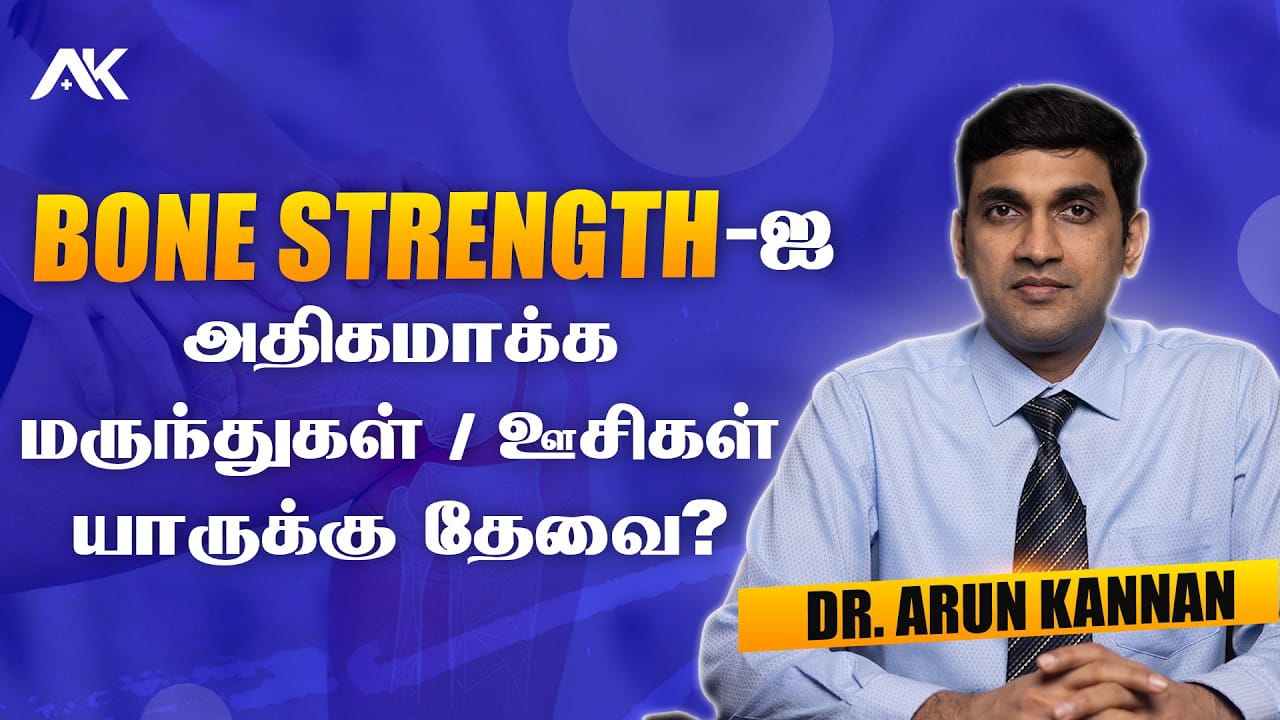
In this article, Dr. Arun Kannan, Orthopaedic Surgeon, Apollo Hospitals, Chennai and Jayam Ortho Care, Kodambakkam, explains bone density, osteoporosis, calcium and vitamin D supplementation, weight-bearing exercise, and the different types of medication used when bone loss becomes significant.
What Is Bone Density?
Bone may look like a solid structure, but it is actually living tissue.
Throughout life, the body continuously removes older bone tissue and replaces it with new bone.
This process is known as bone remodelling.
When we are younger, new bone formation generally keeps pace with—or exceeds—bone loss. As we age, however, bone breakdown can gradually become greater than bone formation.
As a result, bones may become:
- Less dense
- More porous
- Weaker
- More vulnerable to fractures
The amount of mineral present in the bones is commonly assessed as bone mineral density, or BMD.
What Is Osteoporosis?
Osteoporosis is a condition in which bones become weak and more susceptible to fractures.
The word literally refers to porous or fragile bone.
In osteoporosis, the internal structure of the bone becomes weaker. This means an injury that would not normally break a healthy bone may result in a fracture.
Common osteoporosis-related fractures involve the:
- Hip
- Spine
- Wrist
- Shoulder
- Other bones after relatively minor trauma
Osteoporosis develops when bone loss exceeds the body’s ability to replace bone effectively.
Why Is Osteoporosis Called a “Silent Disease”?
One of the most important facts about osteoporosis is that it may produce no symptoms for many years.
You cannot reliably determine bone strength based on:
- How strong you feel
- Whether your joints hurt
- Whether you have back pain
- Your ability to walk
- Your appearance
A person can have significant bone loss without knowing it.
For some patients, the first sign of osteoporosis is unfortunately a fracture after a relatively minor fall or injury.
This is why osteoporosis is often described as a silent disease.
Does Osteoporosis Cause Bone Pain?
Not necessarily.
This is another common misconception.
Having weak bones does not automatically cause everyday bone or joint pain.
Knee pain, shoulder pain or back pain may have many other causes, including:
- Osteoarthritis
- Muscle problems
- Disc disease
- Tendon problems
- Ligament injuries
Osteoporosis itself may remain completely silent until a fracture occurs.
Pain may develop if osteoporosis results in a fracture, particularly a spinal compression fracture.
Who Is More Likely to Develop Osteoporosis?
Bone density naturally decreases with age, but some people lose bone more rapidly than others.
Risk generally increases with:
- Increasing age
- Menopause
- Family history of osteoporosis
- Previous low-trauma fracture
- Low body weight
- Long-term physical inactivity
- Smoking
- Excessive alcohol intake
- Certain hormonal disorders
- Certain gastrointestinal conditions
- Long-term use of some medicines, especially corticosteroids
- Calcium or vitamin D deficiency
- Certain chronic illnesses
Women are particularly vulnerable after menopause because hormonal changes accelerate bone loss.
Current screening recommendations strongly support osteoporosis screening in women aged 65 years and older, as well as younger postmenopausal women whose risk profile indicates increased fracture risk. Recommendations for routine screening in men vary between professional bodies, so individual risk assessment is important.
How Do You Know Whether Your Bones Are Weak?
The most commonly used test is a:
DEXA or DXA Scan
DEXA stands for Dual-Energy X-ray Absorptiometry.
It is a specialised scan used to measure bone mineral density, commonly at the:
- Hip
- Spine
The procedure is generally quick and non-invasive.
The result helps doctors assess whether bone density is:
- Normal
- Reduced
- In the osteoporosis range
What Is a T-Score?
One of the measurements reported on a DEXA scan is the T-score.
The T-score compares your bone density with that of a healthy young adult reference population.
A commonly used interpretation is:
T-score of -1.0 or above
Generally considered normal bone density.
T-score between -1.0 and -2.5
Generally classified as osteopenia, or low bone mass.
T-score of -2.5 or below
Generally classified as osteoporosis.
However, treatment decisions should not be based on the T-score alone. Previous fragility fractures, age, medical history and estimated fracture risk also matter.
What Is Osteopenia?
Osteopenia means your bone density is lower than normal but has not reached the usual diagnostic threshold for osteoporosis.
This should be considered an opportunity for prevention.
A person with osteopenia may be advised to focus on:
- Adequate dietary calcium
- Vitamin D
- Weight-bearing exercise
- Muscle strengthening
- Fall prevention
- Smoking cessation
- Limiting excessive alcohol
- Managing underlying medical conditions
Some people with osteopenia may still require osteoporosis medication if their overall fracture risk is high.
Calcium: Why Is It Important for Bones?
Calcium is one of the major minerals used to build and maintain bone.
Most of the body’s calcium is stored in bones and teeth.
Calcium is also essential for:
- Muscle contraction
- Nerve function
- Normal heart function
- Blood clotting
The body therefore needs an adequate and reliable supply of calcium throughout life.
Should Everyone Take Calcium Tablets?
No.
Calcium tablets are not automatically necessary for everyone.
If you receive sufficient calcium through food, additional supplementation may not be required.
Good dietary sources may include:
- Milk
- Curd or yoghurt
- Paneer
- Cheese in moderation
- Ragi
- Sesame seeds
- Certain green leafy vegetables
- Calcium-fortified foods
- Some fish
- Other calcium-rich foods
Diet is generally the preferred first source when adequate intake can be achieved.
Supplements are particularly useful when dietary calcium is insufficient or when a doctor identifies a specific need.
More Calcium Does Not Mean Stronger Bones
Patients sometimes believe:
“If one calcium tablet is good, taking more must make my bones stronger.”
That is not correct.
The body requires an appropriate amount, not unlimited calcium.
Excess supplementation can cause problems in some individuals.
The required amount also depends on:
- Age
- Sex
- Diet
- Medical conditions
- Kidney health
- Other medications
Therefore, long-term supplementation should ideally be discussed with your doctor rather than self-prescribed.
What Does Vitamin D Do?
Vitamin D plays a critical role in helping the body absorb calcium from the intestine.
You may consume adequate calcium, but insufficient vitamin D can impair calcium absorption and affect bone health.
Vitamin D also contributes to:
- Normal muscle function
- Bone mineralisation
- Calcium regulation
Vitamin D can come from:
- Sunlight exposure
- Certain foods
- Supplements when required
Can Sunlight Give You Enough Vitamin D?
Sunlight helps the skin produce vitamin D.
However, the amount produced varies greatly depending on:
- Time of day
- Skin pigmentation
- Clothing
- Latitude
- Season
- Air pollution
- Time spent outdoors
- Age
This means there is no universal number of minutes of sun exposure that guarantees an adequate vitamin D level for everyone.
Regular outdoor activity can still be useful, but individuals at risk of deficiency may require blood testing and supplementation.
Are Calcium and Vitamin D “Bone-Strengthening Medicines”?
Not exactly.
This distinction is extremely important.
Calcium and vitamin D are primarily nutritional supplements or foundational nutrients.
They provide the body with materials required for healthy bone metabolism.
However, if a person has established osteoporosis, calcium and vitamin D alone may not be enough to substantially reduce fracture risk.
In such patients, doctors may prescribe specific osteoporosis medicines in addition to ensuring adequate calcium and vitamin D.
Exercise Is Also a Bone Medicine
Bone responds to mechanical loading.
Activities in which the bones and muscles work against gravity are known as weight-bearing exercises.
Examples include:
- Walking
- Stair climbing where appropriate
- Low-impact aerobic activity
- Selected jogging in suitable individuals
- Resistance training
- Strength exercises
Weight-bearing and resistance exercises help maintain:
- Bone strength
- Muscle strength
- Balance
- Coordination
Improving muscle strength and balance is particularly important in older adults because preventing falls is one of the most effective ways to prevent fractures.
Is Walking Good for Bone Density?
Yes, walking is a useful weight-bearing activity.
Regular walking can support:
- Bone health
- Cardiovascular fitness
- Muscle endurance
- Balance
- General mobility
However, walking alone may not be enough for every person.
A comprehensive programme may also include resistance exercises appropriate for age and physical condition.
Patients with severe osteoporosis or previous spinal fractures should ask their doctor or physiotherapist which exercises are safe.
What If My T-Score Is Between -1 and -2.5?
This falls within the osteopenia range.
Treatment generally depends on your total fracture risk rather than the T-score alone.
Your doctor may recommend:
- Adequate calcium
- Adequate vitamin D
- Weight-bearing exercise
- Strength training
- Fall prevention
- Lifestyle modification
- Periodic monitoring
Additional osteoporosis medication may be considered when other risk factors make the probability of fracture sufficiently high.
What If My T-Score Is -2.5 or Lower?
A T-score of -2.5 or below is generally within the osteoporosis range.
At this stage, calcium, vitamin D and exercise remain important—but many patients also require specific medication to reduce fracture risk.
The exact drug depends on:
- Age
- Severity of osteoporosis
- Previous fractures
- Kidney function
- Gastrointestinal conditions
- Other illnesses
- Other medications
- Overall fracture risk
How Do Osteoporosis Medicines Work?
Bone is constantly undergoing two processes:
Bone Resorption
Old bone tissue is broken down and removed.
Bone Formation
New bone tissue is created.
In healthy bone, these processes remain reasonably balanced.
In osteoporosis, bone breakdown can exceed bone formation.
Osteoporosis medicines broadly work by either:
1. Reducing bone breakdown — antiresorptive medicines
or
2. Stimulating new bone formation — anabolic or bone-building treatment
Some modern treatments can influence both pathways.
What Are Bisphosphonates?
Bisphosphonates are one of the most established categories of osteoporosis medication.
They primarily work by slowing excessive bone resorption.
Examples include:
- Alendronate
- Risedronate
- Ibandronate
- Zoledronic acid
Depending on the medicine, they may be given as:
- Tablets
- Intravenous treatment
Bisphosphonates are commonly used in many patients with osteoporosis.
How Are Oral Bisphosphonates Taken?
Certain oral bisphosphonates require specific instructions because they are absorbed poorly and may irritate the oesophagus.
Depending on the medication, patients may be instructed to:
- Take the tablet on an empty stomach
- Take it with plain water
- Remain sitting or standing upright afterwards
- Avoid eating immediately after taking it
Always follow the instructions provided for the specific medication you have been prescribed.
What If I Cannot Tolerate Osteoporosis Tablets?
Oral medicines are not suitable for everyone.
For example, certain patients may have:
- Significant reflux
- Oesophageal problems
- Difficulty following the dosing instructions
- Other medical contraindications
Doctors may then consider injectable or intravenous alternatives depending on the patient’s condition.
Are There Osteoporosis Injections?
Yes.
Several osteoporosis medicines are available as injections or intravenous treatment.
These should not all be thought of as the same type of injection.
Different medications have very different mechanisms and dosing schedules.
Antiresorptive Injections
One example is denosumab, which reduces the activity of cells responsible for breaking down bone.
It is used in selected patients at increased fracture risk and is administered at defined intervals.
An important point is that medicines such as denosumab should not be stopped or delayed without medical advice, because treatment changes may require another osteoporosis medication to prevent rapid bone loss.
Intravenous Bisphosphonate Treatment
Some bisphosphonates can be administered through a vein rather than taken as tablets.
This can be useful for selected patients who:
- Cannot tolerate oral medication
- Have difficulty adhering to tablet instructions
- Require an alternative treatment strategy
Your kidney function and other health factors need to be assessed before certain treatments.
What Are Anabolic or Bone-Building Medicines?
Patients with very severe osteoporosis or a particularly high risk of fracture may sometimes be considered for medicines that stimulate new bone formation.
These are sometimes called:
Anabolic osteoporosis treatments
They are generally reserved for selected patients rather than being used automatically in everyone with low bone density.
Depending on the medication and clinical situation, treatment may continue for a defined course, after which an antiresorptive medicine is often required to maintain the bone-density improvement.
Who Might Need Stronger Bone-Building Treatment?
Such treatment may be considered when a patient has:
- Very low bone density
- Multiple osteoporosis-related fractures
- Vertebral fractures
- Hip fractures
- A fracture despite appropriate previous therapy
- Very high calculated fracture risk
The decision should be made by a doctor familiar with osteoporosis management.
Why Is a Previous Fracture So Important?
A fracture caused by relatively minor trauma can be one of the strongest warning signs of osteoporosis.
For example:
A normal bone may tolerate a simple fall.
A severely osteoporotic bone may fracture after the same fall.
Common fragility fractures include:
- Hip fracture
- Wrist fracture
- Vertebral compression fracture
- Shoulder fracture
A previous fragility fracture may indicate a need for osteoporosis treatment even when the DEXA result is not dramatically low.
Osteoporosis and Spine Fractures
Osteoporosis can weaken the vertebrae in the spine.
A weakened vertebra may gradually collapse or fracture.
Possible signs include:
- Sudden back pain
- Loss of height
- Increasing forward curvature
- Difficulty standing upright
However, some vertebral fractures cause surprisingly little pain and may only be discovered during imaging.
Why Are Hip Fractures Especially Important?
Hip fractures are among the most serious complications of osteoporosis, especially in older adults.
They can lead to:
- Hospital admission
- Surgery
- Reduced mobility
- Loss of independence
- Prolonged rehabilitation
- Increased risk of additional health complications
Preventing the first osteoporosis-related fracture is therefore extremely important.
Is Osteoporosis Treatment Only About Medicines?
No.
Medication is only one component.
Good osteoporosis management generally includes:
1. Adequate calcium
Preferably through food where practical.
2. Adequate vitamin D
Through appropriate sunlight, diet and supplementation when necessary.
3. Weight-bearing exercise
Such as regular walking where safe.
4. Strength training
To maintain muscle strength.
5. Balance training
Especially for older adults.
6. Fall prevention
Correcting hazards in the home can be extremely important.
7. Avoiding smoking
Smoking contributes to poor bone health.
8. Limiting excessive alcohol
Heavy alcohol use increases osteoporosis and fall risk.
9. Appropriate medication
When fracture risk justifies treatment.
Fall Prevention Is Part of Osteoporosis Treatment
Having stronger bones is only part of preventing fractures.
Preventing falls is equally important.
Older adults should consider:
- Good lighting at home
- Removing loose rugs
- Avoiding slippery bathroom floors
- Installing grab rails where needed
- Wearing appropriate footwear
- Correcting vision problems
- Reviewing medications that cause dizziness
- Improving leg strength
- Balance exercises
A fall prevented may mean a fracture prevented.
Do Osteoporosis Medicines Need to Be Taken Forever?
Not necessarily.
Different osteoporosis medicines have different recommended treatment durations.
Some patients may use a medicine for several years before the doctor reassesses whether it should be:
- Continued
- Changed
- Temporarily paused
- Followed by another therapy
The answer depends on the medication and the patient’s fracture risk.
Never stop osteoporosis treatment on your own.
Some medicines require carefully planned transition to another treatment.
How Often Should Bone Density Be Rechecked?
There is no single interval appropriate for every patient.
Repeat DEXA scanning depends on:
- Initial T-score
- Age
- Treatment
- Fracture risk
- Medical conditions
- Whether the result would change management
For many treated patients, the doctor may repeat bone-density assessment after an appropriate interval to evaluate the response.
Scanning too frequently may not provide useful additional information.
Frequently Asked Questions About Osteoporosis, Calcium and Vitamin D
1. Does everyone above 50 have osteoporosis?
No.
Bone density generally decreases with age, but not everyone over 50 has osteoporosis.
Your risk depends on several factors, including age, menopause, genetics, nutrition, physical activity, medications and medical conditions.
2. Can I know whether I have osteoporosis from symptoms?
Usually not.
Osteoporosis can remain completely silent until a fracture occurs.
A bone-density test may be required to identify it.
3. What is the best test for osteoporosis?
A DEXA or DXA scan is the most commonly used bone mineral density test.
It usually measures bone density at the hip and spine.
4. What does a T-score of -1 mean?
A T-score of -1.0 or above is generally within the normal range.
5. What does a T-score of -2 mean?
A T-score of -2 falls within the osteopenia or low-bone-mass range.
It does not automatically mean you need strong osteoporosis medicine.
Your overall fracture risk needs to be assessed.
6. What does a T-score of -2.5 mean?
A T-score of -2.5 or below is generally within the diagnostic range for osteoporosis in the appropriate population.
Treatment should then be discussed with your doctor.
7. Is calcium enough to treat osteoporosis?
Usually not when osteoporosis is established and fracture risk is significant.
Calcium is important nutritional support, but patients with osteoporosis may also require medications specifically designed to reduce fractures.
8. Is vitamin D enough to treat osteoporosis?
Vitamin D deficiency should be corrected, but vitamin D alone does not replace osteoporosis medication when specific treatment is indicated.
9. Should I take calcium every day?
That depends on how much calcium you receive from your diet and your individual requirements.
If dietary intake is adequate, supplementation may not always be needed.
10. Can taking too much calcium be harmful?
Yes.
More is not necessarily better.
Excessive supplementation may cause side effects and may not provide additional bone benefit.
Take the dose recommended for your individual needs.
11. What foods are high in calcium?
Common calcium sources include:
- Milk
- Curd
- Paneer
- Ragi
- Sesame
- Certain leafy vegetables
- Calcium-fortified foods
- Selected fish
A balanced diet should be the foundation whenever possible.
12. How do I know whether I am vitamin D deficient?
A blood test called 25-hydroxy vitamin D may be used when testing is clinically indicated.
Your doctor can decide whether testing is necessary based on symptoms and risk factors.
13. Is sunlight enough for vitamin D?
It may be enough for some people, but not everyone.
Vitamin D production through sunlight varies substantially according to skin type, age, clothing, location and lifestyle.
Some people require supplementation.
14. Can osteoporosis be reversed?
Bone density can sometimes improve with appropriate treatment, but the goal is not simply to make a scan number normal.
The primary objective is to strengthen bone and reduce the risk of fractures.
15. Is osteopenia the same as osteoporosis?
No.
Osteopenia means bone density is below normal but not yet within the usual osteoporosis range.
However, people with osteopenia can still fracture if other risk factors are present.
16. Does osteopenia always need medication?
No.
Many people can initially be managed with:
- Calcium adequacy
- Vitamin D
- Exercise
- Fall prevention
- Lifestyle changes
Medication may be considered if overall fracture risk is high.
17. Is walking enough to strengthen bones?
Walking is useful, but a complete bone-health programme may also include resistance and balance exercises.
Muscle strengthening is especially important as we age.
18. Is swimming good for osteoporosis?
Swimming is excellent for cardiovascular fitness and muscle conditioning, but because it is not strongly weight-bearing, it does not provide the same bone-loading stimulus as walking or resistance exercise.
It can still be part of a balanced fitness programme.
19. Can I jog if I have osteoporosis?
It depends on the severity of osteoporosis and whether you have had previous fractures.
A person with mild bone loss may tolerate certain impact activities, while someone with severe osteoporosis or vertebral fractures may need a lower-impact programme.
Ask your doctor or physiotherapist.
20. What are bisphosphonates?
Bisphosphonates are medications that reduce excessive bone breakdown.
They are commonly used in osteoporosis and may be available as tablets or intravenous treatment.
21. Are osteoporosis injections better than tablets?
Not automatically.
The appropriate treatment depends on:
- Severity of osteoporosis
- Fracture history
- Kidney health
- Gastrointestinal problems
- Previous treatment
- Patient preference
- Overall fracture risk
Injections may be better for certain patients and unnecessary for others.
22. Are osteoporosis medicines safe?
Like all medicines, osteoporosis drugs can have side effects.
However, for patients at substantial fracture risk, the potential benefit of preventing serious fractures may considerably outweigh the treatment risks.
The safest choice depends on careful patient selection and monitoring.
23. If I start osteoporosis treatment, do I need calcium and vitamin D too?
Usually, adequate calcium and vitamin D remain important while taking osteoporosis medication unless your doctor advises otherwise.
The required amount should be individualised.
24. Can osteoporosis medicines rebuild bone?
Some medications mainly slow bone loss.
Others are specifically designed to stimulate new bone formation.
The latter are generally reserved for selected high-risk patients.
25. Who may need osteoporosis injections?
Injectable treatment may be considered in patients who:
- Cannot tolerate tablets
- Have gastrointestinal problems
- Have severe osteoporosis
- Have experienced fragility fractures
- Have very high fracture risk
- Have not responded adequately to previous treatment
The specific injection depends on the individual patient.
26. What happens if osteoporosis is left untreated?
Significant osteoporosis can increase the risk of fractures.
Potential consequences include:
- Hip fracture
- Spinal fracture
- Wrist fracture
- Chronic pain
- Reduced mobility
- Loss of independence
This is why identifying high-risk patients before the first major fracture is so important.
27. Can men develop osteoporosis?
Yes.
Although osteoporosis is particularly common in postmenopausal women, men can also develop significant bone loss and fractures.
Men with risk factors should discuss bone-health assessment with their doctor.
28. Can younger people have osteoporosis?
Yes.
Younger adults may develop osteoporosis because of:
- Certain hormonal disorders
- Chronic illnesses
- Malabsorption
- Long-term steroid use
- Certain medications
- Very low body weight
- Other underlying conditions
Young patients with unexpected low bone density require proper medical evaluation rather than simply taking calcium.
29. What should I do after an osteoporosis-related fracture?
A low-trauma fracture should trigger an assessment of underlying bone health.
Treatment may include:
- Bone-density testing
- Blood investigations
- Calcium and vitamin D assessment
- Fall-risk evaluation
- Osteoporosis medication where indicated
- Rehabilitation
Treating the fracture alone without addressing the underlying weak bone may leave the patient at risk of another fracture.
30. What is the most important message about osteoporosis?
Do not wait for a fracture to discover that your bones are weak.
People at increased risk should discuss bone-health assessment with their doctor.
And if osteoporosis is diagnosed, treatment should be based on the severity of bone loss and overall fracture risk—not simply on taking calcium tablets.
A Simple Way to Understand Osteoporosis Treatment
Think about bone-health management in three broad stages:
Normal Bone Density
Focus on prevention:
Healthy diet + adequate calcium + vitamin D + regular exercise + healthy lifestyle
Osteopenia
Focus on:
Lifestyle + calcium/vitamin D adequacy + weight-bearing and strengthening exercise + assessment of fracture risk
Some higher-risk patients may also require medication.
Osteoporosis
Continue all the foundational measures, but specific antiresorptive or bone-building medication may also be required based on fracture risk.
Severe Osteoporosis / Fragility Fractures
Patients at very high fracture risk may require a more intensive treatment strategy, sometimes including injectable or bone-building therapies.
Final Takeaway
Calcium and vitamin D are extremely important for maintaining healthy bones.
But they should not be confused with medications used to treat significant osteoporosis.
If your bone density is normal, the focus should be on maintaining bone health through:
- A nutritious calcium-rich diet
- Adequate vitamin D
- Regular weight-bearing exercise
- Muscle strengthening
- Healthy lifestyle habits
If you have osteopenia, your overall fracture risk should be assessed and preventive measures intensified.
If you have osteoporosis—especially if you have already suffered a fragility fracture—calcium and vitamin D alone may not be enough. Specific osteoporosis medicines may be required to reduce further bone loss, stimulate new bone formation and, most importantly, lower the risk of future fractures.
The objective of osteoporosis treatment is not simply to improve a number on the DEXA report.
The real goal is to prevent fractures, preserve mobility and help you remain independent as you grow older.
Consult Dr. Arun Kannan
Dr. Arun Kannan
MS Ortho (AIIMS), FAOA (AUS), FARS (USA)
Senior Consultant Orthopaedic Surgeon
Knee, Hip & Joint Replacement Surgeon
Apollo Hospitals
Greams Road
Chennai
Jayam Ortho Care
4, 6th Cross Street
United India Colony
Kodambakkam
Chennai – 600024
Appointments
+91 93604 38720
044-24844718
044-24728875
Medical Disclaimer: This article is intended for general educational purposes only. Osteoporosis diagnosis and treatment should be individualised according to age, medical history, bone-density results, previous fractures, kidney function and overall fracture risk. Do not start, stop or change calcium, vitamin D or prescription osteoporosis medicines without consulting your treating doctor.