
 4 October, 2026
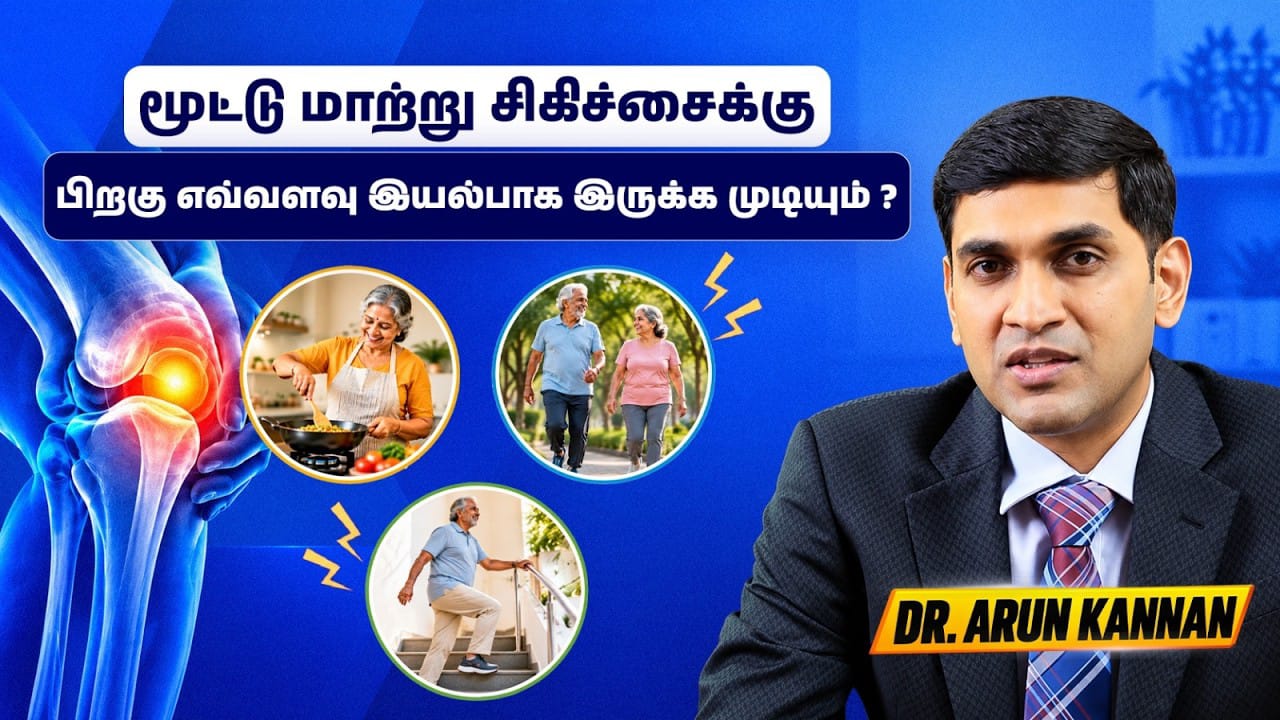
Can You Return to a Normal Life After Knee Replacement Surgery?
One of the biggest worries patients have before knee replacement surgery is not actually the operation itself.
It is what happens after the operation.
Patients often ask:
“Will I be able to walk normally again?”
“Can I climb stairs?”
“Will I always need a walker?”
“Can I travel?”
“Can I drive?”
“Will I be able to live independently?”
And perhaps the most important question:
“Will I get my normal life back after knee replacement?”
For most appropriately selected patients, the goal of knee replacement is exactly that: to reduce disabling arthritis pain, improve mobility, and help the person return to a more independent and active life.
But recovery is not instantaneous.
A knee replacement is a major operation, and getting the best result requires a combination of good surgery, rehabilitation, muscle strengthening, patience, and realistic expectations.
In this article, Dr. Arun Kannan, Orthopaedic Surgeon specialising in knee and hip replacement in Chennai, explains what “normal life” actually means after knee replacement, how recovery progresses, which activities are usually possible, and which precautions may still be necessary.
Why Is Knee Replacement Done?
Knee replacement is generally considered when arthritis has progressed to the point that pain and stiffness significantly interfere with everyday life.
Patients may struggle with:
- Walking even short distances
- Climbing stairs
- Standing for long periods
- Getting up from a chair
- Sleeping because of knee pain
- Going shopping
- Travelling
- Going to work
- Participating in family activities
Some patients gradually stop doing things they once enjoyed simply because every activity becomes painful.
When appropriate non-surgical treatment is no longer providing meaningful relief, knee replacement may be considered.
What Happens During Knee Replacement?
In total knee replacement, the damaged surfaces of the knee joint are removed and replaced with artificial components.
The entire leg or entire knee is not “removed.”
Instead, the surgeon resurfaces the damaged areas at the ends of the thigh bone and shin bone and inserts specially designed implants.
A plastic bearing surface is placed between the metal components to allow smooth movement.
The objective is to create a stable, well-aligned, functional joint with substantially less arthritic pain.
Does Knee Replacement Give You a Completely “Normal” Knee?
This is an important expectation to understand.
A successful knee replacement can provide major improvements in:
- Pain
- Walking
- Stability
- Mobility
- Independence
- Quality of life
But an artificial knee is still an artificial joint.
Some patients eventually become so comfortable that they barely think about the replaced knee during routine activities.
Others remain aware of mild:
- Stiffness
- Numbness near the scar
- Clicking
- Difficulty kneeling
- Reduced deep bending
Therefore, the goal should not be:
“I want the knee I had when I was 20.”
A more realistic goal is:
“I want to live my daily life without severe arthritis pain controlling everything I do.”
How Soon Can You Walk After Knee Replacement?
Many patients are encouraged to stand and begin walking very early after surgery, often on the same day or the following day when medically appropriate.
Initially, walking may require:
- A walker
- A walking frame
- Crutches
The physiotherapy team teaches the patient how to:
- Get out of bed safely
- Stand
- Walk
- Turn
- Sit down
- Use the bathroom
- Manage stairs when appropriate
Early mobilisation also helps reduce some complications associated with prolonged bed rest.
Will I Need a Walker Forever?
No.
The walker is usually temporary.
As:
- Pain improves
- Balance improves
- Muscle strength returns
- Confidence increases
patients may progress from a walker to a walking stick and eventually to independent walking.
The exact timeline differs from patient to patient.
Someone who was active and strong before surgery may recover faster than a person who had been barely walking for several years.
A Realistic Knee Replacement Recovery Timeline
Recovery is not identical for everyone, but understanding the broad stages can make the process less frightening.
First Few Days
The focus is on:
- Pain control
- Wound care
- Standing
- Walking with assistance
- Knee movement
- Basic exercises
- Preventing blood clots
Patients gradually become confident getting in and out of bed and using the bathroom.
First 2 Weeks
During the first couple of weeks, some:
- Pain
- Swelling
- Tightness
- Bruising
are expected.
Walking usually becomes easier each day.
Physiotherapy focuses on improving:
- Knee straightening
- Knee bending
- Quadriceps strength
- Walking pattern
The incision also begins healing.
Weeks 3–6
Many patients become much more independent during this period.
Depending on individual progress, they may:
- Walk farther
- Require less support
- Manage routine home activities
- Climb stairs more confidently
- Return to selected work
Swelling may still occur, particularly toward the end of the day.
6–12 Weeks
For many patients, this is when life starts feeling significantly more normal.
Walking becomes easier and strength continues to improve.
Many people can resume:
- Shopping
- Social outings
- Longer walks
- Driving when cleared
- Office work
- Routine travel
But recovery is still continuing.
3–6 Months
Strength, balance and confidence usually continue improving.
Many patients return to most low-impact daily activities.
Some people reach a very good level earlier; others take longer.
Up to One Year
Subtle improvements can continue for many months.
Residual:
- Swelling
- Stiffness
- Muscle weakness
may gradually improve throughout the first year.
So do not judge the final result of your knee replacement after only two or three weeks.
Will Knee Replacement Remove All Pain Immediately?
No.
Arthritis pain may be removed by replacing the damaged joint surfaces, but the surgery itself temporarily creates postoperative pain.
During the first few weeks, patients commonly experience:
- Surgical soreness
- Muscle pain
- Tightness
- Swelling
This should gradually improve.
The character of the pain is often different from the deep arthritic pain present before surgery.
Why Does the Knee Remain Swollen After Surgery?
Swelling is common after knee replacement.
The tissues have undergone a major operation and need time to recover.
Swelling may increase after:
- Longer walks
- Physiotherapy
- Standing for prolonged periods
It often gradually reduces over several weeks or months.
Your surgical team may recommend:
- Appropriate elevation
- Ice
- Movement
- Prescribed medication
depending on your condition.
Sudden severe swelling, however, needs medical assessment.
Why Physiotherapy Matters So Much
Surgery creates the new joint.
Rehabilitation teaches you how to use it.
Physiotherapy is essential for restoring:
- Movement
- Muscle strength
- Balance
- Walking confidence
One of the most important muscles is the quadriceps.
Patients with long-standing knee arthritis often have significant quadriceps weakness before surgery because they have been avoiding painful activity for months or years.
That muscle does not become strong simply because the implant has been inserted.
It has to be rebuilt.
Can You Climb Stairs After Knee Replacement?
Yes, most patients can.
Initially, patients may use:
- Handrails
- A walking aid
- One-step-at-a-time technique
As strength and balance improve, many return to a more natural stair-climbing pattern.
Stair climbing often takes longer to become comfortable than level-ground walking because it requires greater muscle strength.
Can You Walk Long Distances?
Yes.
One of the objectives of knee replacement is to increase walking ability.
However, patients should build distance gradually.
Do not leave hospital and immediately attempt a 5-kilometre walk.
Begin with shorter periods and progressively increase according to:
- Strength
- Pain
- Swelling
- Physiotherapist guidance
Can You Drive After Knee Replacement?
Most patients eventually return to driving.
The timing depends on:
- Which knee was operated on
- Strength
- Reaction time
- Pain
- Mobility
- Whether you are still taking sedating pain medication
Right-knee replacement may require more recovery before safe braking and accelerator control.
Your surgeon should clear you before driving.
When Can You Return to Work?
It depends greatly on the job.
Desk Job
Some patients may return within several weeks when mobility and comfort allow.
Job Requiring Standing
More recovery may be necessary.
Heavy Manual Work
Work involving:
- Heavy lifting
- Climbing
- Construction
- Repeated squatting
may require a much longer recovery period or activity modification.
The timeline should be personalised.
Can You Travel After Knee Replacement?
Yes.
Many patients travel comfortably after recovering.
For early long-distance travel, however, discuss timing with your surgeon because recent surgery temporarily increases the risk of blood clots.
When travelling later, especially on long journeys:
- Move your legs periodically
- Avoid sitting continuously for many hours
- Walk when possible
- Follow any specific medical advice
Can You Fly After Knee Replacement?
Eventually, yes.
The main issue immediately after surgery is not the aircraft itself but:
- Blood-clot risk
- Mobility
- Swelling
- Access to medical care
Do not schedule an early long-haul flight without discussing it with your surgeon.
Can You Sit on the Floor?
This is particularly important for Indian patients.
Floor sitting requires significant knee bending.
Some patients after knee replacement may eventually manage certain floor positions, while others may find them uncomfortable or difficult.
It depends on:
- Knee range of motion
- Muscle strength
- Body weight
- Implant
- Individual anatomy
Floor sitting should not be forced.
Can You Sit Cross-Legged?
Some patients may eventually be able to sit cross-legged.
But this is not guaranteed after every knee replacement.
The primary goals of surgery are:
- Pain relief
- Walking
- Functional independence
rather than achieving extreme knee bending.
Ask your surgeon before repeatedly attempting deep-flexion activities.
Can You Use an Indian-Style Toilet?
Deep squatting requires a large amount of knee bending and places significant forces through the joint.
For many knee replacement patients, a Western-style toilet is preferred.
Even if someone is physically capable of deep squatting, repetitive extreme flexion may not be recommended.
Discuss this specifically with your surgeon.
Can You Kneel After Knee Replacement?
Many patients technically can kneel after adequate healing, but some find it uncomfortable because of:
- Scar sensitivity
- Numbness
- Pressure over the front of the knee
Difficulty kneeling does not necessarily mean the replacement has failed.
If kneeling is important for your work, religious practice or lifestyle, discuss it during rehabilitation.
Can You Exercise After Knee Replacement?
Absolutely.
Exercise is encouraged.
Good options after recovery may include:
- Walking
- Stationary cycling
- Swimming
- Low-impact gym exercise
- Strength training
- Elliptical exercise
Exercise helps maintain:
- Muscle strength
- Weight
- Cardiovascular fitness
- Balance
Can You Go to the Gym?
Yes, once your surgeon and physiotherapist allow it.
A gym programme may include:
- Controlled leg strengthening
- Upper-body exercise
- Cycling
- Low-impact cardiovascular exercise
The objective is not to test how much weight the artificial knee can tolerate.
It is to improve overall fitness safely.
Can You Run After Knee Replacement?
Routine high-impact running is generally not encouraged for most knee replacement patients.
Running creates repeated higher-impact forces across the artificial joint.
Lower-impact activities are usually preferred.
What Sports Are Usually Better After Knee Replacement?
Lower-impact recreational activities are generally more suitable.
Examples can include:
- Walking
- Cycling
- Swimming
- Golf
- Doubles tennis in selected patients
- Low-impact fitness
High-impact or contact sports require individual discussion.
Why Maintaining Weight Matters After Surgery
A knee replacement does not make body weight irrelevant.
Every additional kilogram still contributes to mechanical load through the joint.
Maintaining a healthy weight can help:
- Make walking easier
- Reduce stress on the implant
- Improve general health
- Reduce cardiovascular and diabetes risk
Use your improved mobility after surgery as an opportunity to remain active.
Will the Knee Feel Completely Natural?
Some patients describe their replacement as feeling very natural after recovery.
Others remain aware that it is an artificial joint.
You may occasionally notice:
- Clicking
- Mild tightness
- Numbness near the incision
These symptoms can occur even when the replacement is functioning well.
Is Clicking After Knee Replacement Normal?
Occasional clicking can occur because artificial components move against each other.
If there is:
- No significant pain
- No swelling
- No instability
it may not be concerning.
However, new painful clicking or instability should be assessed.
Will My Knee Bend Fully?
Range of motion depends on:
- Preoperative movement
- Severity of deformity
- Surgery
- Rehabilitation
- Scar formation
One of the strongest predictors of postoperative bending is how much movement the patient had before surgery.
Physiotherapy helps maximise functional motion.
Why You Should Not Compare Your Recovery With Another Patient
Two people can undergo knee replacement on the same day and recover very differently.
Factors include:
- Age
- Weight
- Muscle strength
- Arthritis severity
- Preoperative mobility
- Other illnesses
- Pain tolerance
- Motivation
Do not become discouraged because another patient started walking independently sooner.
Your goal is steady progress.
Robotic Knee Replacement: Does It Change Recovery?
Robotic-assisted systems can help surgeons plan and execute bone preparation and implant positioning with precision.
Dr. Arun Kannan performs robotic-assisted knee replacement as part of his orthopaedic practice. Apollo Hospitals
However, robotics does not eliminate the need for:
- Physiotherapy
- Exercise
- Wound care
- Weight management
- Patient participation
Technology helps the surgeon perform the procedure; recovery still requires teamwork between the patient and medical team.
How Long Does a Knee Replacement Last?
Modern knee replacements are designed to provide long-term function.
Many continue functioning for 15–20 years or longer, and some last considerably longer.
But no surgeon can guarantee an implant for a particular number of years.
Longevity depends on:
- Age
- Weight
- Activity
- Implant fixation
- Infection
- Bone quality
- Trauma
- Mechanical wear
Regular follow-up can help identify problems early.
What Symptoms After Knee Replacement Need Urgent Attention?
Contact your medical team if you develop:
- Persistent high fever
- Increasing redness around the wound
- Wound discharge
- Rapidly increasing swelling
- Severe calf pain
- Sudden breathlessness
- Chest pain
- Inability to move the knee after a fall
Sudden chest pain or significant breathlessness after recent surgery requires urgent medical attention.
Frequently Asked Questions About Life After Knee Replacement
1. Can I live a normal life after knee replacement?
For most appropriately selected patients, yes.
The objective is to restore comfortable everyday mobility and independence.
2. Will I be able to walk normally?
Most patients improve substantially.
Muscle strength and walking pattern take time to recover.
3. How soon will I walk after surgery?
Many patients begin assisted walking very early, often on the day of surgery or the following day when medically suitable.
4. Will I need a walker permanently?
No.
Walking aids are generally temporary.
5. How long does complete recovery take?
Major functional improvement often occurs during the first 6–12 weeks, but recovery can continue for many months and sometimes up to a year.
6. How painful is recovery?
Pain is expected initially but usually improves progressively.
Modern multimodal pain-control techniques help manage postoperative discomfort.
7. When can I climb stairs?
Stairs are usually introduced during rehabilitation.
Independent stair climbing improves as strength returns.
8. Can I sleep on my side?
Usually yes after an appropriate recovery period.
Positioning advice may vary according to comfort and individual circumstances.
9. When can I drive?
Many patients return to driving within several weeks, but clearance depends on which knee was operated on and your ability to safely control the vehicle.
10. Can I travel by car?
Yes.
During early recovery, avoid remaining seated continuously for long periods.
Take appropriate movement breaks.
11. Can I fly after knee replacement?
Yes eventually, but discuss early air travel with your surgeon because of postoperative blood-clot risk.
12. Can I go abroad after surgery?
Yes once recovery is adequate and your medical team considers travel safe.
13. Can I go back to office work?
Usually yes.
Desk work generally requires less recovery time than physically demanding jobs.
14. Can I cook and perform household activities?
Yes.
Patients gradually return to routine household activities as strength and confidence improve.
15. Can I climb stairs every day?
Usually yes once rehabilitation allows it.
Repeated unnecessary stair climbing for exercise may not be the best fitness choice.
16. Can I sit cross-legged?
Possibly, but it is not guaranteed.
Do not force the knee into deep flexion.
17. Can I sit on the floor?
Some patients can; others find it difficult.
It depends largely on postoperative range of motion and individual anatomy.
18. Can I use an Indian toilet?
Deep squatting is often discouraged or difficult after knee replacement.
A Western-style toilet is generally more convenient.
19. Can I kneel?
Some patients can kneel after recovery, but many find pressure over the operated knee uncomfortable.
20. Can I cycle?
Yes.
Stationary cycling is often an excellent rehabilitation and long-term exercise.
21. Can I swim?
Swimming can be a good low-impact exercise once the surgical wound is completely healed and your doctor permits it.
22. Can I run?
Regular high-impact running is generally not recommended for most knee replacement patients.
23. Can I go to the gym?
Yes after appropriate recovery.
Use controlled, low-impact strengthening rather than suddenly attempting very heavy exercise.
24. Can I lift weights?
Moderate resistance exercise may be possible.
The appropriate load depends on fitness, technique and your surgeon’s advice.
25. Is clicking from the artificial knee dangerous?
Occasional painless clicking may occur.
Painful clicking, swelling or instability needs assessment.
26. Why is my knee still swollen after two months?
Some swelling can persist for several months.
The overall trend should gradually improve.
27. Will the numb area around my scar disappear?
Numbness around part of the incision is common.
It may improve with time, although a small area of altered sensation can remain.
28. Will knee replacement completely remove arthritis?
The severely damaged joint surfaces are replaced, so the arthritis causing the pain is addressed.
However, the artificial knee still requires sensible long-term care.
29. How long will the implant last?
Many modern knee replacements function for decades, but longevity varies and no exact lifespan can be guaranteed.
30. Can knee replacement be done again if it wears out?
Yes.
This is called revision knee replacement.
Revision surgery is more complex than the first operation but may be performed when clinically necessary.
31. Can diabetic patients return to normal life after replacement?
Yes, many do.
Good blood-sugar control is important because uncontrolled diabetes can increase infection and healing risks.
32. Is knee replacement safe for people over 70?
Age alone does not decide suitability.
Overall health, mobility, heart and lung function, diabetes and expected benefit are more important.
33. Will robotic knee replacement allow faster recovery?
Robotics may assist accurate surgical planning and implant positioning, but recovery still depends on many factors including rehabilitation, muscle strength and individual health.
34. What is the most important thing I can do after surgery?
Follow the rehabilitation programme consistently.
A technically successful operation achieves its full benefit when the patient rebuilds:
- Movement
- Strength
- Confidence
What Does “Normal Life” Really Mean After Knee Replacement?
For most patients, a successful result does not mean running marathons or sitting in a deep squat every day.
Normal life means being able to:
Get out of bed without severe arthritis pain.
Walk around the house independently.
Go shopping.
Attend family functions.
Climb necessary stairs.
Travel.
Exercise.
Sleep without constant knee pain.
Return to work and social activities.
Enjoy life without planning every movement around an arthritic knee.
That is the real objective of knee replacement.
Final Takeaway
Knee replacement should not be thought of as the end of an active life.
For the right patient, it can be the beginning of a more mobile one.
If severe knee arthritis has gradually reduced your walking, independence and quality of life, the purpose of replacement surgery is to help restore those functions.
Recovery requires time.
There will be swelling.
There will be physiotherapy.
Some days will feel better than others.
But progress is usually measured over weeks and months, not hours.
Do not compare your recovery with another patient.
Do not rush into high-impact activity simply because pain has improved.
Build strength gradually and follow your surgeon’s rehabilitation plan.
A successful knee replacement is not simply an X-ray showing a well-positioned implant.
Success is when the patient can return to living life with far less pain and greater independence.
Consult Dr. Arun Kannan
Dr. Arun Kannan
MS Ortho (AIIMS)
Fellowship in Hip & Knee Replacement – Virginia, USA
Orthopaedic Surgeon
Hip & Knee Replacement and Robotic Joint Replacement
Jayam Ortho Care
4, 6th Cross Street
United India Colony
Kodambakkam
Chennai – 600024
Appointment
+91 93604 38720
044-24844718
044-24728875
Apollo Hospitals
Greams Road
Chennai, Tamil Nadu
Dr. Kannan’s official clinic currently lists the above Jayam Ortho Care address, appointment numbers, and email. Dr Arun Kannan
Medical Disclaimer: This article is intended for general educational purposes only. Recovery after knee replacement varies according to age, health, preoperative mobility, surgical findings and rehabilitation. Activity restrictions and return-to-work, driving, travel and exercise recommendations should be individualised by the treating orthopaedic surgeon.