
 19 October, 2026
Foods for Strong Bones: Why Calcium Alone Is Not Enough
A practical guide to calcium, protein, vitamin D, exercise, osteoporosis prevention and healthier ageing
“Doctor, I take a calcium tablet every day. My bones should be strong, right?”
This is a very common assumption.
Whenever people think about bone health, the first nutrient that comes to mind is calcium. Calcium is certainly important, but bones are much more complex than a block of calcium.
Bone is living tissue. It is continuously being broken down and rebuilt throughout life. It contains mineral, collagen and living cells, and its strength is influenced by nutrition, hormones, physical activity, muscle strength, age and several medical conditions.
So if someone wants stronger bones, simply taking a calcium tablet is not enough.
A better question is:
“Am I giving my bones everything they need to remain strong?”
In this article, Dr. Arun Kannan, Orthopaedic Surgeon at Apollo Hospitals, Chennai and Jayam Ortho Care, Kodambakkam, explains the important nutrients people often forget, why protein matters just as much as calcium, how vitamin D helps, which foods support bone health, and when supplements or a bone-density test may actually be necessary.
Your Bones Are Living Tissue
We often imagine bones as permanent structures that remain unchanged once we become adults.
That is not true.
Bone undergoes a continuous process called remodelling.
Old or damaged bone is removed and new bone is formed in its place.
When we are young, bone formation is generally very active. Over time, particularly with increasing age and after menopause in women, the balance can gradually shift toward bone loss.
This is why the habits we build early in life matter.
But it is equally important to understand that bone health can still be supported at older ages through appropriate nutrition, physical activity and medical care. Health
Bone Strength Is Not Just About Calcium
A healthy bone contains both:
Mineral
which provides hardness and strength,
and
Collagen and other proteins
which provide structure and flexibility.
Think of reinforced concrete.
Cement alone is not enough. The supporting framework is also important.
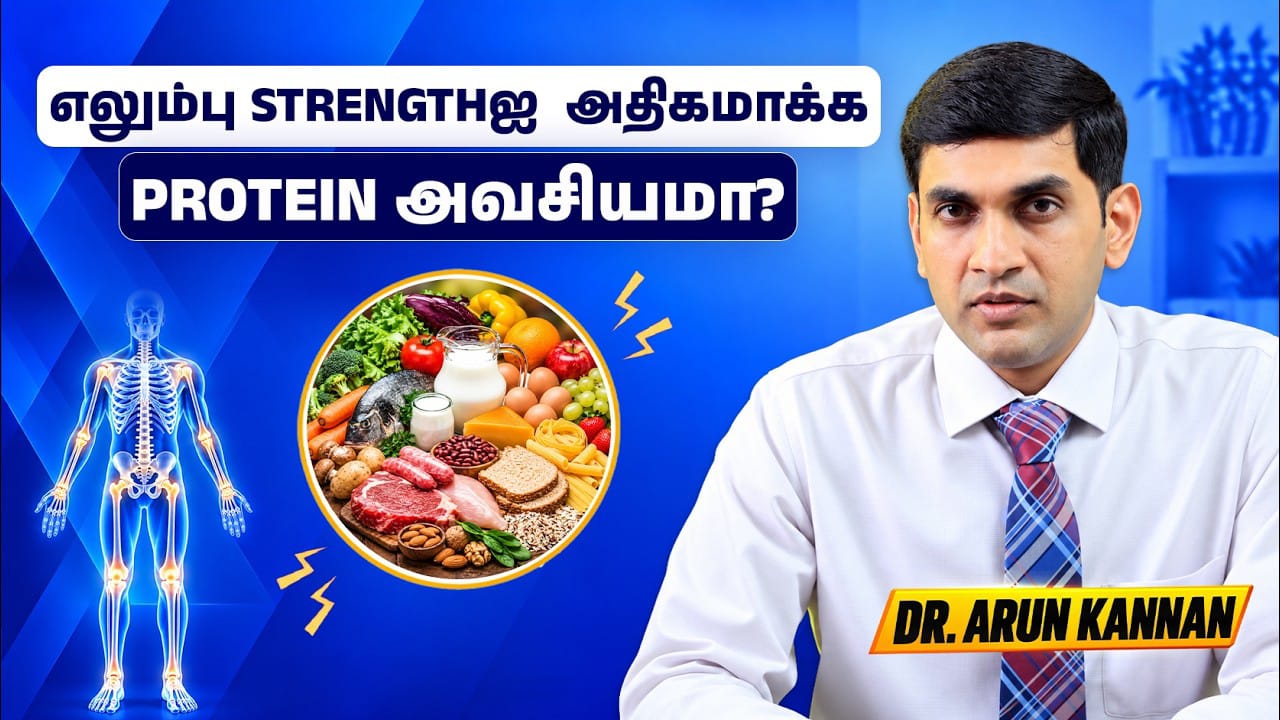
In the same way, calcium is important for bone—but adequate protein is also essential for maintaining the structure around which bone mineral is deposited.
This is one of the most commonly overlooked aspects of bone health.
Why Protein Matters for Your Bones
Many older adults reduce their food intake as they age.
Sometimes they eat enough rice, idli, dosa or other carbohydrates but very little protein.
Over time, this can contribute to loss of muscle.
That becomes a double problem.
Weak muscles can mean:
- Poor balance
- Difficulty getting up from a chair
- Slower walking
- Greater risk of falling
And when someone with weak bones falls, the risk of fracture becomes much more important.
So the goal of bone-health nutrition should not simply be:
“Make the bone stronger.”
It should also be:
“Keep the muscles strong enough to protect the bones.”
NIH guidance specifically identifies adequate protein, calcium, vitamin D and physical activity as important components of bone health. Health
What Are Good Protein Sources?
Protein needs can be met through vegetarian or non-vegetarian diets.
Common options include:
Vegetarian sources: milk, curd, paneer, lentils, dal, chickpeas, rajma, soybeans, tofu, nuts and seeds.
Non-vegetarian sources: eggs, fish, chicken and other lean meats.
The exact amount needed varies according to:
- Age
- Body weight
- Kidney function
- Physical activity
- Medical conditions
An older adult who is losing muscle may need a more deliberate protein strategy than a healthy young person.
Patients with significant kidney disease should seek individual dietary advice rather than dramatically increasing protein on their own.
Why Calcium Is Still Important
Calcium remains one of the major minerals in bone.
If the body does not receive enough calcium through food, it still needs calcium for:
- Muscle contraction
- Nerve function
- Heart function
- Other biological processes
The body can therefore draw calcium from the skeleton.
Over long periods, inadequate calcium intake can contribute to poor bone health.
But this does not mean everyone should immediately start calcium tablets.
For many people, food should be the first source.
Which Foods Are Rich in Calcium?
Useful dietary sources can include:
- Milk
- Curd or yoghurt
- Paneer
- Calcium-fortified foods
- Certain green leafy vegetables
- Tofu prepared with calcium
- Sesame and some other seeds
- Sardines and other fish eaten with soft bones
The amount of calcium varies widely between foods.
Someone who eats dairy regularly may already obtain a substantial amount through diet, whereas someone who avoids all dairy and fortified alternatives may need closer attention to calcium intake.
Is Milk Necessary for Strong Bones?
No single food is compulsory.
Milk is convenient because it provides:
- Calcium
- Protein
- Other nutrients
But people who do not consume milk can still build a bone-supportive diet.
Alternative sources may include:
- Curd or paneer if tolerated
- Fortified plant-based milk
- Tofu
- Certain vegetables
- Appropriate fish
- Other calcium-containing foods
People following vegan diets need to plan calcium intake more deliberately.
What About Ragi?
Ragi is commonly discussed in India as a calcium-containing food.
It can certainly contribute to dietary calcium and provides other nutrients.
However, one food alone will not protect someone from osteoporosis.
Bone health depends on the complete dietary pattern plus:
- Vitamin D
- Protein
- Exercise
- Hormonal status
- Age
- Other medical factors
The better approach is variety rather than depending on a single “bone-strengthening” food.
Why Vitamin D Is So Important
You can consume plenty of calcium, but your body still needs vitamin D to help absorb calcium effectively from the intestine.
Vitamin D also has important roles in muscle and bone function.
Low vitamin D levels may contribute to:
- Bone weakness
- Osteomalacia
- Muscle weakness
- Increased fall risk in susceptible individuals
Vitamin D can come from:
- Sunlight exposure
- Certain foods
- Fortified foods
- Supplements when medically indicated
However, vitamin D status varies greatly depending on lifestyle, skin exposure, age and medical conditions. Health
“I Live in India. Can I Still Be Vitamin D Deficient?”
Yes.
Living in a sunny country does not automatically guarantee adequate vitamin D.
Many people spend most of the day:
- Indoors
- In offices
- In cars
- Away from direct sunlight
Clothing, skin pigmentation, age and other factors also influence vitamin D production.
If your doctor suspects deficiency—particularly in the presence of osteoporosis, repeated fractures or muscle weakness—a blood test may be appropriate.
Should Everyone Take Vitamin D Tablets?
No.
Some patients genuinely need supplementation.
Others may already have adequate levels.
The dose also matters.
Taking very large amounts unnecessarily can cause problems.
Vitamin D supplements should ideally be used for a clear reason and in an appropriate dose rather than because “vitamin D is good for bones.”
What About Calcium Tablets?
Calcium supplementation may be useful when dietary intake is inadequate or when a doctor recommends it as part of osteoporosis treatment.
But more calcium does not automatically mean stronger bones.
Before taking long-term supplements, it is worth asking:
- How much calcium am I already getting through food?
- Do I actually need supplementation?
- Which formulation am I taking?
- Am I taking other medicines?
- Do I have kidney problems or kidney stones?
Supplements should fill a genuine nutritional gap, not replace a balanced diet.
Can Taking Too Much Calcium Be Harmful?
Yes, excessive supplementation is unnecessary and can cause problems in some individuals.
Possible concerns can include:
- Constipation
- Gastrointestinal discomfort
- Kidney-stone risk in susceptible people
- Excess calcium levels in certain circumstances
That is why calcium should not be taken on the assumption that “if one tablet is good, two must be better.”
What Is Osteoporosis?
Osteoporosis is a condition in which bones become weaker and more likely to fracture.
It is often called a silent disease because many people do not feel anything while bone strength is gradually decreasing.
The first sign may unfortunately be a fracture.
Common osteoporotic fractures affect:
- Hip
- Spine
- Wrist
These fractures can significantly affect mobility and independence, particularly in older adults. Health
Who Is More Likely to Develop Osteoporosis?
Risk increases with age, but several other factors matter.
People at increased risk can include those with:
- Menopause
- Previous low-impact fracture
- Family history of osteoporosis or hip fracture
- Very low body weight
- Long-term steroid treatment
- Smoking
- Heavy alcohol use
- Low calcium and vitamin D intake
- Prolonged physical inactivity
- Certain hormonal or gastrointestinal conditions
Osteoporosis is more common in women, particularly after menopause, but men can also develop it.
Why Menopause Matters
Estrogen has an important role in maintaining bone.
After menopause, estrogen levels fall significantly.
Bone loss can therefore accelerate in women during this period.
This is one reason women should not wait until a fracture occurs before thinking about bone health.
Diet, strength, fall prevention and appropriate screening become increasingly important.
Do Men Get Osteoporosis?
Yes.
It is a common misconception that osteoporosis is exclusively a women’s disease.
Men generally develop osteoporosis later than women, but they can still experience serious fractures.
Risk may increase with:
- Age
- Low testosterone
- Smoking
- Alcohol misuse
- Steroid use
- Certain illnesses
- Low body weight
Bone health deserves attention in both sexes.
What Is a Bone Density Test?
A DXA or DEXA scan measures bone mineral density.
It is commonly performed at sites such as the:
- Hip
- Spine
The result helps doctors assess bone strength and fracture risk.
The test is quick and uses a very small amount of radiation.
Does Everyone Need a Bone Density Scan?
No.
Bone-density testing is generally recommended according to age and individual fracture risk.
It may be considered earlier when someone has important risk factors such as:
- Fragility fracture
- Long-term steroid use
- Premature menopause
- Very low body weight
- Certain chronic diseases
- Strong osteoporosis risk
Your doctor can decide whether and when testing is appropriate.
What Is a Fragility Fracture?
A fragility fracture occurs after relatively minor trauma.
For example:
A person falls from standing height and breaks the hip or wrist.
In a healthy younger adult, such a fall might not normally be expected to break a strong bone.
A low-trauma fracture can therefore be an important warning sign of osteoporosis.
It should not simply be treated as:
“I was unlucky and fell.”
The underlying bone health should also be considered.
Exercise Is Food for Your Bones Too
Nutrition alone cannot create strong bones.
Bone responds to mechanical loading.
When you:
- Walk
- Climb stairs
- Perform resistance exercise
- Carry appropriate loads
the skeleton receives signals that help maintain strength.
Weight-bearing and resistance exercises are therefore important components of bone-health programmes. NIAMS
Is Walking Enough for Strong Bones?
Walking is excellent for:
- General fitness
- Mobility
- Cardiovascular health
- Maintaining activity
It is also weight-bearing.
But if the goal is to preserve both bone and muscle as we age, resistance or strength training is also important.
This may involve:
- Resistance bands
- Light weights
- Gym machines
- Body-weight exercises
The programme should suit your age, strength and joint condition.
Why Muscle Strength Matters as Much as Bone Density
Imagine two people with similar bone density.
One has:
- Strong legs
- Good balance
- Good reflexes
The other has:
- Weak legs
- Poor balance
- Frequent falls
The second person may be at greater fracture risk simply because they are more likely to fall.
This is why osteoporosis prevention must also include fall prevention.
Balance Exercises Are Particularly Important With Age
As we get older, balance may decline.
Appropriate balance training can help improve stability.
Examples can include supervised:
- Single-leg standing
- Step exercises
- Tai chi
- Balance drills
People who already have severe osteoporosis or poor balance should seek professional guidance before starting challenging exercises. NIAMS
Does Cycling Strengthen Bones?
Cycling is excellent for:
- Cardiovascular fitness
- Leg muscles
- Joint-friendly exercise
However, because your body weight is largely supported by the bicycle, cycling provides less weight-bearing stimulus to bones than activities such as walking or resistance training.
So someone who cycles regularly may still benefit from adding:
- Walking
- Strength training
to their routine.
What About Swimming?
Swimming is another excellent low-impact activity.
It is particularly useful for:
- Cardiovascular fitness
- Joint problems
- General conditioning
But because water supports body weight, it does not provide the same bone-loading stimulus as weight-bearing exercise.
It should therefore ideally be part of a broader fitness programme if bone strength is a priority.
Can Someone With Osteoporosis Exercise?
Usually yes—and remaining active is important.
But exercise must be adapted when fracture risk is high.
Some people with osteoporosis may need to avoid:
- High-impact activities
- Sudden twisting
- Forceful forward bending of the spine
A physiotherapist or qualified clinician can help design a safe programme. NIAMS
Does Being Overweight Protect Against Osteoporosis?
Not necessarily.
Higher body weight can sometimes be associated with greater bone density, but obesity brings its own problems.
It can contribute to:
- Reduced mobility
- Diabetes
- Joint arthritis
- Falls
- Poor muscle quality
Bone health is not simply about being heavier.
The goal should be a healthy body composition with adequate muscle.
Can Being Too Thin Affect Bone Health?
Yes.
Very low body weight is an established risk factor for osteoporosis.
People who follow extreme diets or severely restrict calories may not receive enough:
- Calcium
- Protein
- Vitamin D
- Other nutrients
Women may also develop menstrual or hormonal disturbances with extreme calorie restriction or overtraining, further affecting bone health.
Are Crash Diets Bad for Your Bones?
They can be.
Rapid weight loss without sufficient protein or resistance exercise can cause muscle loss.
If dietary quality is poor, important bone nutrients may also be missed.
The goal should be:
Lose excess fat if necessary while preserving muscle and adequate nutrition.
Does Smoking Affect Bone Strength?
Yes.
Smoking is associated with weaker bones and higher fracture risk.
Stopping smoking benefits:
- Bone health
- Heart health
- Lung health
- Surgical outcomes
There is no bone supplement that can compensate for continued heavy smoking. Health
What About Alcohol?
Heavy alcohol consumption can weaken bones and increase the risk of falls.
Alcohol can therefore raise fracture risk through more than one pathway.
Moderation is important.
Can Medicines Weaken Bones?
Some medicines can contribute to bone loss when used for long periods.
One important example is corticosteroid medication.
People taking long-term steroids for conditions such as:
- Autoimmune diseases
- Lung disease
- Rheumatological conditions
may need assessment of their bone health.
Never stop prescribed steroids suddenly, however.
Discuss bone protection with your treating doctor.
Bone Health Is Not Built at Age 60
Bone health begins much earlier.
Childhood, adolescence and early adulthood are important periods for building peak bone mass.
This is why children and young adults need:
- Good nutrition
- Adequate protein
- Calcium
- Vitamin D
- Regular physical activity
The stronger the bone reserve built earlier in life, the better the starting point for later ageing. Health
What Should a Bone-Healthy Plate Look Like?
You do not need a special “orthopaedic diet.”
A balanced Indian meal can easily support bone and muscle health.
For example, meals can combine:
A protein source such as dal, pulses, curd, paneer, eggs, fish or lean meat.
Calcium-containing foods such as dairy, fortified alternatives, tofu or appropriate greens.
Vegetables and whole fruits for micronutrients.
Whole grains or appropriate carbohydrates for energy.
Nuts and seeds in sensible quantities.
The main principle is variety.
Frequently Asked Questions About Food and Bone Strength
1. Is calcium the most important nutrient for bones?
Calcium is very important, but it is not the only requirement. Protein and vitamin D are also essential, and physical activity is necessary to maintain strong bones and muscles.
2. Can I make my bones stronger just by taking calcium tablets?
No. Supplements cannot replace appropriate nutrition, exercise, muscle strengthening and management of medical risk factors.
3. Does protein really help bones?
Yes. Protein forms an important part of bone structure and is essential for maintaining the muscles that protect the skeleton.
4. Which protein is best for bone health?
There is no single best protein. Dairy, pulses, legumes, soy, eggs, fish and lean meats can all contribute according to dietary preference.
5. Is milk compulsory?
No. Milk is a convenient source of calcium and protein but is not essential if those nutrients are adequately obtained elsewhere.
6. Can lactose-intolerant people maintain strong bones?
Yes. They can use suitable dairy products if tolerated, lactose-free products, fortified alternatives and other calcium-rich foods.
7. Is curd good for bones?
Curd can provide calcium and protein and can be a useful part of a balanced diet.
8. Is paneer good for bones?
Yes, paneer contains protein and calcium, although portions should fit the person’s overall nutritional and calorie needs.
9. Is ragi enough to prevent osteoporosis?
No. Ragi can contribute calcium, but osteoporosis prevention requires a much broader approach.
10. Which fruits contain the most calcium?
Fruit should be eaten primarily as part of an overall balanced diet rather than relied upon as the main calcium source. Dairy, fortified foods, tofu and certain other foods generally contribute more calcium.
11. Does eating more calcium increase bone density immediately?
No. Bone remodelling occurs gradually, and simply increasing calcium beyond what the body needs does not rapidly create stronger bone.
12. Should everyone take vitamin D?
No. Supplementation should depend on individual need, diet, sunlight exposure, risk factors and sometimes blood-test results.
13. Can sunlight alone provide enough vitamin D?
It may for some people, but many factors influence vitamin D production. Deficiency can still occur even in sunny regions.
14. Does vitamin D directly strengthen bones?
Vitamin D helps the body absorb calcium and supports bone and muscle function. Severe deficiency can contribute to weak bones.
15. Should I take calcium and vitamin D together?
Some people may need both, while others may not. The decision should depend on dietary intake and individual clinical needs.
16. Is a higher dose of vitamin D better?
No. Excessive vitamin D can be harmful. Use an appropriate dose recommended by a healthcare professional.
17. Are calcium tablets safe for kidney-stone patients?
The answer depends on the type of stone, dietary intake and medical history. Do not start high-dose supplements without discussing them with your doctor.
18. Can osteoporosis cause knee pain?
Osteoporosis itself often does not cause pain until a fracture occurs. Knee pain is more commonly related to conditions such as osteoarthritis.
19. Are osteoporosis and osteoarthritis the same?
No.
Osteoporosis affects bone strength.
Osteoarthritis affects the joint, including cartilage and surrounding structures.
A person can have either condition or both.
20. Does calcium rebuild knee cartilage?
No. Calcium supports bone health but does not regrow worn knee cartilage.
21. Can food reverse osteoporosis?
Nutrition is important but established osteoporosis may require specific medication to reduce fracture risk.
22. Who should have a DEXA scan?
Screening depends on age, sex and individual fracture risk. People with fragility fractures or important risk factors may require testing earlier.
23. If my DEXA scan is normal, do I still need calcium and exercise?
Yes. Healthy lifestyle habits help maintain bone strength before problems develop.
24. Does walking build strong bones?
Walking provides useful weight-bearing activity, but adding resistance exercise can provide broader benefits to muscle and bone.
25. Is weight training safe for older adults?
Often yes, when appropriately prescribed and progressed. Technique and supervision are especially important for beginners and people with osteoporosis.
26. Is cycling good for osteoporosis?
Cycling is excellent exercise but provides relatively little weight-bearing stimulus. It can be combined with walking and resistance training.
27. Is swimming enough for bone strength?
Swimming has many health benefits but is not strongly weight-bearing. Add suitable land-based exercise when possible.
28. Can a fracture be the first sign of osteoporosis?
Yes. Osteoporosis can remain silent until a low-trauma fracture occurs.
29. Can osteoporosis be treated after a fracture?
Yes. A fragility fracture should prompt assessment of bone health, and appropriate treatment can reduce the risk of future fractures.
30. What is the biggest mistake people make with bone health?
Focusing only on calcium.
Strong bones require adequate nutrition, protein, vitamin D, muscle strength, weight-bearing exercise, balance and appropriate medical care.
A Simple Bone-Health Formula
Remember these four areas:
Nutrition
Get adequate calcium, protein, vitamin D and a balanced range of nutrients.
Strength
Maintain muscle through resistance exercise.
Loading
Include appropriate weight-bearing activity.
Prevention
Avoid smoking, limit excessive alcohol, prevent falls and assess osteoporosis risk when appropriate.
If one component is missing, simply adding more calcium will not solve the problem.
Final Takeaway
When patients think about strong bones, they usually think of one thing:
Calcium.
But bone health is not built from a single nutrient.
Your skeleton needs:
Calcium for mineral strength.
Protein for its structural framework and muscle health.
Vitamin D to support calcium absorption and bone function.
Exercise to provide the mechanical stimulus that helps maintain bone.
Strong muscles and good balance to reduce falls.
The best strategy is therefore not to ask:
“Which calcium tablet should I buy?”
Start by asking:
“Is my overall diet, muscle strength and lifestyle supporting my bones?”
A balanced meal, regular resistance and weight-bearing exercise, healthy body weight and targeted supplementation when genuinely required are far more useful than taking supplements blindly.
And if you have already experienced a low-trauma fracture, significant loss of height, osteoporosis risk factors or long-term steroid use, do not wait for another fracture.
Discuss whether you need a bone-density assessment and a personalised prevention plan.
Strong bones are not built by one tablet. They are built through nutrition, movement and consistent care across a lifetime.
Consult Dr. Arun Kannan
Dr. Arun Kannan
MS Ortho (AIIMS)
Fellowship in Hip & Knee Replacement – Virginia, USA
Orthopaedic Surgeon – Orthopaedics & Robotic Surgery
Hip & Knee Replacement, Robotic Joint Replacement
Jayam Ortho Care / Jayam Knee Clinic
4, 6th Cross Street
United India Colony
Kodambakkam
Chennai – 600024
Appointments
+91 93604 38720
044-24844718 / 24728875
Apollo Hospitals
Greams Road
Chennai, Tamil Nadu
Dr. Kannan’s clinic currently lists the above address, appointment numbers and email, while Apollo lists him in Orthopaedics and Robotic Surgery with advanced training in hip and knee replacement. Dr Arun Kannan
Medical Disclaimer: This article is intended for general educational purposes only. Calcium, protein and vitamin D requirements vary with age, diet, kidney function, pregnancy, medical history and osteoporosis risk. Do not start high-dose supplements or osteoporosis medication without appropriate medical advice. If you have already had a low-trauma fracture or have significant osteoporosis risk factors, consult a qualified healthcare professional for individual evaluation.