

 25 March, 2026
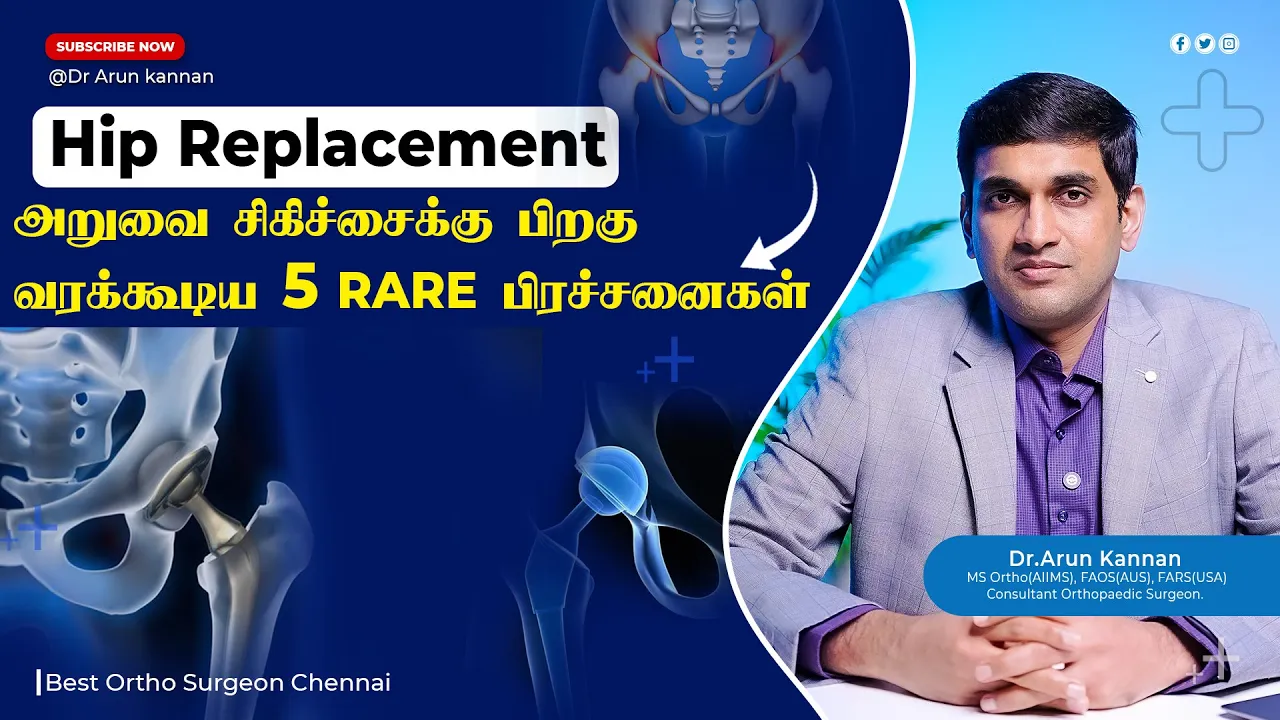
Top 5 but Rare Complications After Total Hip Replacement Surgery (And How They Are Prevented)
Total hip replacement surgery is one of the most successful procedures in orthopedic medicine. For many people, it is life changing: walking becomes possible again, pain reduces, and daily activities feel normal.
And yet, any major surgery comes with risks. A common fear among patients and families is, “What if complications happen?” The best answer is not panic. The best answer is understanding which complications can occur, how often they happen, and what surgeons do to prevent or manage them.
Here are the top 5 complications that are discussed most often after total hip replacement. The key theme is reassuring: these issues are rare, and modern surgical technique plus careful follow up keeps outcomes very strong.
Table of Contents
- Quick baseline: What total hip replacement actually does
- How successful is total hip replacement?
- Top 5 but rare complications after total hip replacement
- What influences these complications the most?
- Recovery expectation: when problems are most likely (and when they are not)
- FAQ
- Bottom line
Quick baseline: What total hip replacement actually does
The hip joint is a ball-and-socket joint. In a healthy hip, the ball moves smoothly inside the socket. When the joint is badly damaged, movement becomes painful and walking becomes difficult.
In total hip replacement, both sides of the joint are replaced:
- Socket replacement: the damaged socket is replaced with a metal socket. Inside it, a liner is used to allow smooth movement.
- Ball and stem replacement: the damaged ball is replaced. A stem is placed inside the thigh bone (femur) to hold the new ball securely.
This design restores smooth movement so the joint can bear body weight and help patients walk comfortably again.
How successful is total hip replacement?
There is no such thing as a “0% risk” surgery. But complication rates are generally low.
Short term (early period): the overall complication risk is often around 1 to 2%. That means if 100 people undergo surgery, roughly 1 to 2 people may experience a complication early after the procedure.
Long term (many years): modern follow up data has shown strong durability. Over very long follow up (around 20 years), 90% or more of patients can still have good function without needing another surgery. This is reflected in long term registry data from major health systems.
With that foundation, let’s look at the top 5 rare complications.
Top 5 but rare complications after total hip replacement
1) Infection (usually rare, but important)
Infection is one complication every patient understands quickly because it can affect healing and the implant itself. The good news is that infection after a well prepared hip replacement is very uncommon.
In general, infection rates are described around 0.4% (about 1 infection per 250 surgeries) in carefully performed settings.
It helps to understand where infection typically comes from, because it is not usually due to the metal implant itself.
- Operating environment and theater factors
- Patient skin bacteria
- Surgical team and instruments
- Other active infection sources in the body, such as urine, lungs, or dental infections, which can occasionally spread
Why this matters: even though the risk is low, prevention focuses on meticulous operating room practices and managing any infections elsewhere in the body before and after surgery.
2) Dislocation (ball slipping out of the socket)
Dislocation is another complication that sounds dramatic because it means the new ball moves out of the socket. The main reason this happens is related to implant position and the way the hip moves.
A key concept after total hip replacement is that the ball and socket are separate components created by surgery. They must work together correctly, and soft tissues around the hip must heal to provide stability.
With proper surgical technique, modern approaches, and patient guidance during recovery, the risk of dislocation becomes very low.
Several factors influence dislocation risk:
- Early healing of soft tissues around the hip. Over the first 1 to 2 months, scar tissue forms and stability improves.
- Component positioning chosen by the surgeon.
- Surgical approach and technique, including modern methods such as direct anterior approach and technology assisted placements.
- Patient precautions during the period your surgeon advises.
The risk is described as early and rare. In rough terms, if regular hip replacements are performed in many patients, dislocation may occur in about 200 to 300 patients at a low rate, depending on technique and circumstances.
How to reduce risk: follow the activity precautions your surgeon gives, especially in the early recovery period. Your surgeon’s instructions are tailored to your implant position and healing plan.
3) Fracture (especially around the femur implant during/just around surgery)
Fracture after hip replacement can be related to the femur bone. The procedure involves placing a stem inside the thigh bone, using a secure fixation technique.
A common way surgeons achieve initial stability is by using a press fit stem. In simple terms, that means the stem is fitted tightly so it stays stable inside the bone, at least initially. Over time, the bone can bond and hold even more securely.
However, there is a rare scenario where excessive force, especially if the stem is inserted quickly or with higher forces than ideal, can cause a crack or fracture of the bone.
This is described as an intra operative type of risk. If the surgeon sees it during surgery, it can often be addressed immediately. For example, the surgeon may use fixation such as wiring around the area to stabilize the bone.
In practice, it is framed as a very rare complication, often discussed as something that can occur in about 1 in 200 to 300 patients.
Additionally, newer stem designs (including certain stem options for specific situations) have been introduced to reduce the risk of fractures further. This means preventive technology continues to improve over time.
4) Leg length discrepancy (a small difference, usually manageable)
After hip replacement, some patients notice that one leg feels slightly longer or slightly shorter. The concern here is understandable because it affects balance and comfort.
In a hip replacement, the surgeon aims to restore biomechanics. But because the hip is a “free joint” surrounded mainly by muscles (rather than a joint that is strictly constrained by ligaments on both sides like some other joints), a small difference can occur while muscles and soft tissues adapt after surgery.
It is important to know what is expected:
- Immediately after surgery, there may be a noticeable sense of difference while tissues are healing.
- Between 3 to 6 months, muscles and tissues adjust, and many patients become comfortable as the body adapts.
- If there is still a difference, it is often manageable with shoe adjustments.
Severe or persistent discrepancies are still rare, and the body often compensates well during the recovery process. If a patient feels off balance, your surgeon can advise how to correct it practically.
5) Long term loosening of components (typically after many years)
This is the “late” complication. Most patients do not face it in the early months after surgery. Instead, it is framed as a complication that can show up in the long term, often after 15 to 20 years.
Why loosening happens: the hip replacement has metal and plastic components. The plastic liner and interface can wear over time due to repeated load and movement. As wear progresses, the stability between components can decrease.
When loosening occurs, symptoms may develop slowly. A patient might notice that pain returns gradually with walking, rather than all at once.
According to the long term outcomes discussed, about 90% of patients may continue to do well up to around 20 years, and issues are more likely beyond about 20 to 25 years depending on conditions and material wear.
What is the solution? If loosening occurs, surgeons can perform a revision hip replacement to replace worn or loose parts and restore stability.
What influences these complications the most?
It is easy to read this list and feel anxious, but here’s the empowering side: many risk factors are under control.
1) Technique and implant positioning
Correct placement of the socket and ball is crucial for stability and function. The use of newer approaches and technology can improve accuracy in component positioning.
2) Soft tissue healing during early recovery
The first 1 to 2 months matter because scar tissue and tissue remodeling increase stability. This is the period where precautions are especially important.
3) Following individualized activity and weight guidance
Your surgeon gives instructions specific to your case. The emphasis here is simple: follow those instructions. Many rare complications become even rarer when patients and caregivers adhere to the recovery plan.
4) Preventing infections elsewhere in the body
Since infection can sometimes originate from urine, lungs, or dental sources, managing other infections reduces risk.
Recovery expectation: when problems are most likely (and when they are not)
Recovery is usually staged. While individual plans vary, the overall message is consistent:
- One to two months: focus on healing and safe movement patterns. This is the time when early complications like dislocation risk are most relevant.
- After that: many patients can walk well with less restriction, and stability continues to improve.
- Late years: if complications like loosening occur, they generally appear after long durations, not immediately.
This timeline is one reason hip replacement is considered extremely successful overall.
FAQ
Are complications after total hip replacement common?
Most patients do very well. Early complications are typically discussed in the range of about 1 to 2%. Long term, registry data shows that over many years, about 90% or more patients maintain good function without needing repeat surgery.
How rare is infection after a hip replacement?
In well prepared settings, infection is described around 0.4%, which means roughly 1 infection per 250 surgeries. Infection can come from skin, the operating environment, surgical team factors, or sometimes other infection sources in the body.
What causes dislocation after total hip replacement?
Dislocation is related to the ball and socket stability, component positioning, soft tissue healing, and patient movement during early recovery. With correct placement and careful precautions, the risk is very low.
Can leg length discrepancy happen after surgery?
Yes, it can happen but is usually small. Many patients adjust over 3 to 6 months as muscles and soft tissues settle. If needed, shoe adjustments can help manage a remaining difference.
When do long term problems like loosening appear?
The discussion focuses on late loosening appearing after many years, often around 15 to 20 years, and the risk becomes more relevant beyond roughly 20 to 25 years for some patients due to wear and long term changes at the implant interface.
Total hip replacement is extremely successful, with strong short term and long term outcomes. Yes, complications can occur, but the “top 5” risks discussed here are rare, and many can be prevented or minimized with modern surgical technique, careful recovery guidance, and appropriate follow up.
If you or a loved one is considering hip replacement, the best next step is a focused discussion with your orthopedic surgeon about your specific risks and the precautions that apply to your recovery.
For appointments or guidance: Jayam Ortho Clinic, Kodambakkam, Chennai. Call or WhatsApp: 93604 38720. Email: arunkannan.arun@gmail.com.