

 16 May, 2026
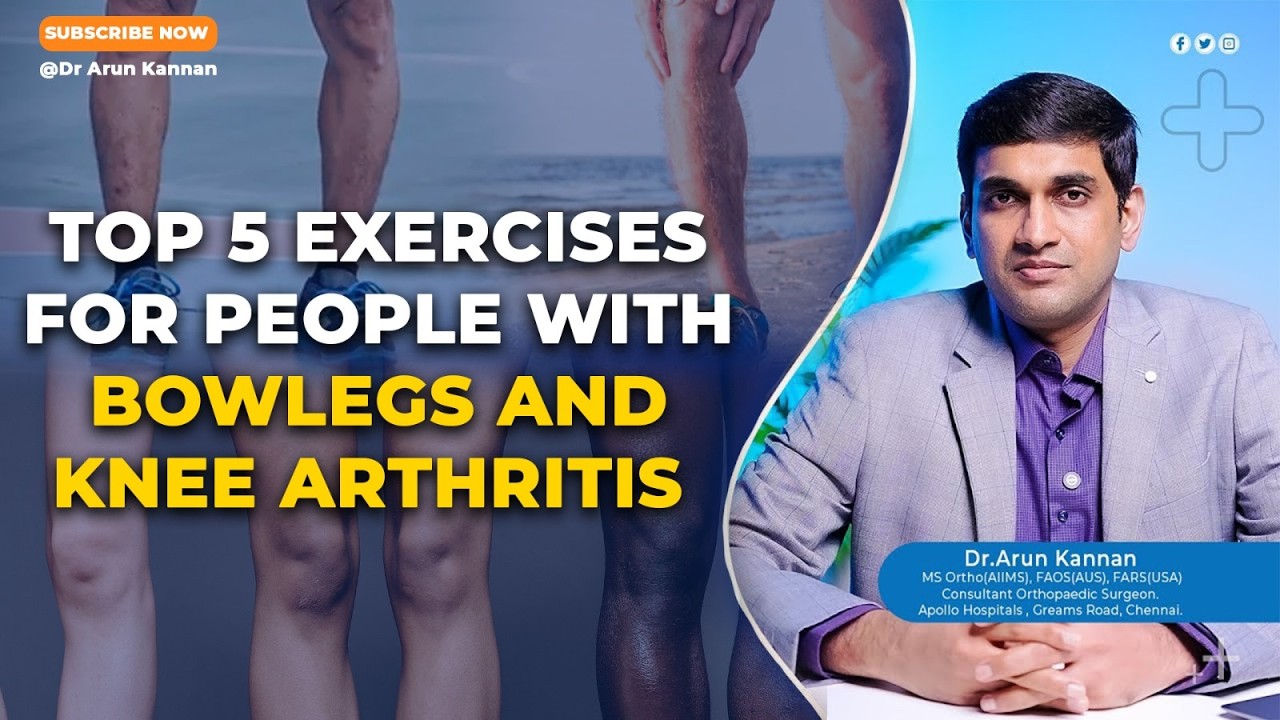
Knee Pain treatment in chennai: 5 Safe Exercises for Bow Legs and Knee Osteoarthritis
Knee pain is one of the most common reasons people seek Knee Pain treatment in chennai, especially when osteoarthritis and bow legs come together. Many people struggle with pain while walking, stiffness during daily activity, and a feeling that all the body weight is falling on the inner side of the knee.
This is very common in knee osteoarthritis involving the medial compartment, which is the inner part of the knee joint. In many cases, this pattern is associated with bow legs. Once this alignment changes, the pressure on the inner side of the knee increases. That increased pressure leads to more pain, more joint wear, and a vicious cycle of weakness and discomfort.
The good news is that the right exercise plan can help. Not every exercise is suitable when the knee is painful, and not every strengthening routine protects the joint. The focus should be on specific muscle groups that support the knee and improve weight distribution.
If you are exploring Knee Pain treatment in chennai, these five exercises are simple, practical, and aimed at strengthening the muscles that matter most: the quadriceps, hamstrings, and hip abductors.
Why bow legs and osteoarthritis often come together
The knee is not just a hinge. It is a load-bearing joint that depends on alignment and muscle support. In osteoarthritis, the joint surfaces begin to wear down. When the inner side of the knee takes more load than it should, the medial compartment is affected more severely.
This is why many people with knee osteoarthritis develop or already have a bow-legged appearance. The knees drift outward, and the mechanical load shifts further inward. The more this happens, the more stress the joint experiences on that side.
That is why strengthening is not just about “exercise for fitness.” It is part of protecting the knee. In many cases, proper strengthening is an important support strategy alongside Knee Pain treatment in chennai.
The main goal of exercise in knee osteoarthritis
When the knee is painful, people often reduce movement. That is understandable, but it creates another problem. Muscles around the knee and hip start getting weaker. Once that happens, the joint loses support and the pain can worsen.
The aim of exercise here is to:
- Strengthen the quadriceps, the large muscles in front of the thigh
- Strengthen the hamstrings, the muscles at the back of the thigh
- Strengthen the hip abductors, especially the muscles that help control body weight distribution while standing and walking
- Reduce long-term stress on the knee joint
These exercises are chosen because they are simple and can be done at home. The key is to do them regularly and in a controlled manner.
Exercise 1: Seated short arc knee extension
One of the simplest and most effective exercises for knee osteoarthritis is the seated leg extension, also called a short arc knee extension.
Why it helps
This exercise targets the quadriceps, which are among the most important muscles for knee support. Weak quadriceps are very common in people with knee pain. When these muscles lose strength, the knee becomes less stable and everyday activities like standing up, climbing steps, or walking become more difficult.
How to do it
- Sit comfortably on a chair.
- Keep your back supported and your feet relaxed.
- Slowly straighten one knee.
- Lift the lower leg until it is almost fully straight.
- Hold briefly, then lower it slowly.
Suggested routine
- Start with 10 to 12 repetitions
- Do 3 sets
- If comfortable, begin with half a kilo of weight and increase gradually over time
This is one of the best starting exercises for people seeking Knee Pain treatment in chennai because it is simple, controlled, and focused.
Exercise 2: Mini squats instead of full squats
Squats are often recommended in general fitness, but when there is knee pain, full squats are generally not recommended. Deep knee bending can place more stress on the joint, especially when osteoarthritis is already present.
That does not mean all squat movement is bad. Mini squats or half squats are a better option.
Why mini squats are better
Mini squats still work the quadriceps, but without forcing the knee into deep flexion. This makes them more comfortable and more suitable for many people with bow legs and osteoarthritis.
How to do it
- Stand with your feet about shoulder-width apart.
- Hold onto a support if needed.
- Bend the knees slightly, as if starting to sit back into a chair.
- Do not go too low.
- Return to standing slowly.
Suggested routine
- 10 to 12 repetitions
- 3 sets
- Move only within a comfortable range
If you have pain with deeper bending, avoid forcing it. In a good Knee Pain treatment in chennai plan, exercise should build support, not aggravate symptoms.
Exercise 3: Prone hamstring curl
The hamstrings are often overlooked, but they are an important part of knee stability. These muscles run along the back of the thigh and help control knee movement.
One useful exercise is the prone hamstring curl.
Why it helps
Balanced strength between the quadriceps and hamstrings matters. If only the front of the thigh is trained and the back is neglected, the knee does not get complete support. One of the key hamstring muscles involved here is the biceps femoris.
How to do it
- Lie on your stomach.
- Keep your hips relaxed.
- Slowly bend one knee, bringing the heel toward the buttock.
- Lower it slowly back down.
Suggested routine
- Begin with 10 to 12 repetitions
- Do 3 sets
- Start without weight if needed
- As strength improves, add half a kilo gradually if comfortable
This is a very simple exercise, but it can be quite effective when done consistently. For many people looking for Knee Pain treatment in chennai, the simplest exercises are often the ones they can actually continue long term.
Exercise 4: Nordic hamstring exercise
Another hamstring-focused option is the Nordic hamstring exercise, sometimes called the Nordic hamstring curl. This is more demanding than the prone curl, so it should be done only if it feels comfortable and controlled.
Why it helps
This exercise challenges the hamstrings strongly and can improve muscle control. It is especially useful once basic comfort and strength have already improved.
How to do it
- Kneel on a soft surface such as a yoga mat.
- Keep the ankles anchored or supported.
- Slowly lean the body forward while controlling the movement with the hamstrings.
- Return carefully.
Suggested routine
- 10 to 12 repetitions
- 3 sets
- Do it only within comfort
If the prone hamstring curl feels easier, that can be your starting point. The Nordic variation is an additional option, not a compulsory one.
Exercise 5: Side-lying hip abduction
One group of muscles is commonly missed in knee pain programs: the hip abductors. These include the muscles on the outer side of the hip, such as the gluteus medius and minimus.
These muscles are extremely important for body weight control during standing and walking. If they are weak, the load distribution through the leg changes, and that can increase stress on the knee.
Why it helps
Strengthening the hip abductors improves how the leg supports body weight. For people with bow legs and medial compartment osteoarthritis, this can be especially helpful in reducing long-term strain.
How to do it
- Lie on your side.
- Keep the lower leg bent for support if needed.
- Keep the upper leg straight.
- Lift the upper leg about 1 to 2 feet, depending on comfort.
- Hold for about 5 seconds.
- Lower slowly.
Suggested routine
- 10 to 12 repetitions per side
- 3 sets per day
- A resistance band can be added later if comfortable
This is a very effective exercise and one that should not be ignored. Good hip strength supports good knee function.
A simple daily structure
If you want to organize these exercises into a routine, this is the basic structure:
- Quadriceps: seated leg extension
- Quadriceps: mini squats or half squats
- Hamstrings: prone hamstring curl
- Hamstrings: Nordic hamstring exercise if comfortable
- Hip muscles: side-lying hip abduction
In general, 10 to 12 repetitions and 3 sets is the repeated pattern across this program. The movements should be controlled, not rushed.
Important caution: avoid full squats when the knee is painful
This point is worth repeating because many people assume more bending means better exercise. That is not always true.
When there is knee osteoarthritis, especially with bow-leg alignment and pain on the inner side of the knee, full squats are generally not recommended. Deep squatting may increase discomfort and mechanical stress. Mini squats are the safer choice in this setting.
This kind of practical modification is an important part of sensible Knee Pain treatment in chennai. The best exercise is not the hardest one. It is the one that strengthens the joint without increasing damage or pain.
How these exercises help in the long term
Exercises do not change the shape of the bones overnight, and they are not a magic cure. But they do something very important. They improve the function of the muscles that support the knee.
Over time, stronger muscles can help with:
- Better knee support during walking
- Improved comfort in day-to-day movement
- Reduced load concentration on the painful side of the joint
- Better control of body weight distribution through the leg
- Less progression of the weakness-pain cycle
That is why regular strengthening is often a key component of conservative Knee Pain treatment in chennai.
Consistency matters more than intensity
One of the biggest mistakes people make is doing too much on one day and then stopping for a week because of soreness. That is not helpful.
Instead:
- Start gently
- Use light resistance such as half a kilo if needed
- Increase only as comfort improves
- Stay regular with your routine
Progress in osteoarthritis care usually comes from consistent practice, not aggressive exercise.
When exercise should be tailored carefully
Not every painful knee is the same. Some people have more advanced osteoarthritis. Some have more bowing. Some tolerate standing exercises well, while others do better starting with seated or lying-down movements.
That is why exercise should always be done with awareness of pain and comfort. If a movement causes clear worsening, it should be modified. In many cases, a proper orthopedic assessment helps decide which exercises are most suitable and which ones should be avoided.
For anyone considering Knee Pain treatment in chennai, the combination of diagnosis, alignment understanding, and targeted strengthening is far more useful than random exercise from the internet.
Quick summary of the 5 exercises
- Seated short arc knee extension for quadriceps strength
- Mini squat or half squat instead of full squats
- Prone hamstring curl for the back of the thigh
- Nordic hamstring exercise as a stronger hamstring option
- Side-lying hip abduction for hip abductors and better load control
This combination addresses the major muscle groups that help support a painful knee affected by osteoarthritis and bow-leg alignment.
FAQ
Are these exercises suitable for people with bow legs?
Yes. These exercises are specifically useful when bow legs are associated with knee osteoarthritis, especially when the inner side of the knee is taking more load. The aim is to strengthen the muscles that support alignment and improve weight distribution.
Can I do full squats if I have knee pain?
Full squats are generally not recommended when you have knee pain from osteoarthritis. Mini squats or half squats are the safer option because they strengthen the quadriceps without deep bending of the knee.
How many repetitions should I do?
A practical starting pattern is 10 to 12 repetitions for each exercise and 3 sets. This repeated structure works well for the quadriceps, hamstrings, and hip strengthening exercises described above.
Can I use weights for these exercises?
Yes, but start light. A weight of half a kilo can be introduced gradually for exercises like seated leg extensions or hamstring curls if the movement feels comfortable. Do not rush the progression.
Why is hip strengthening important in knee osteoarthritis?
The hip abductors help control body weight distribution while standing and walking. If these muscles are weak, more stress may fall on the knee. Strengthening them can improve support and reduce long-term strain.
Is this enough as Knee Pain treatment in chennai?
These exercises are an important part of conservative care, but the right treatment depends on the cause and severity of the knee problem. For many people seeking Knee Pain treatment in chennai, exercise is one part of a broader orthopedic approach.