

 21 September, 2026
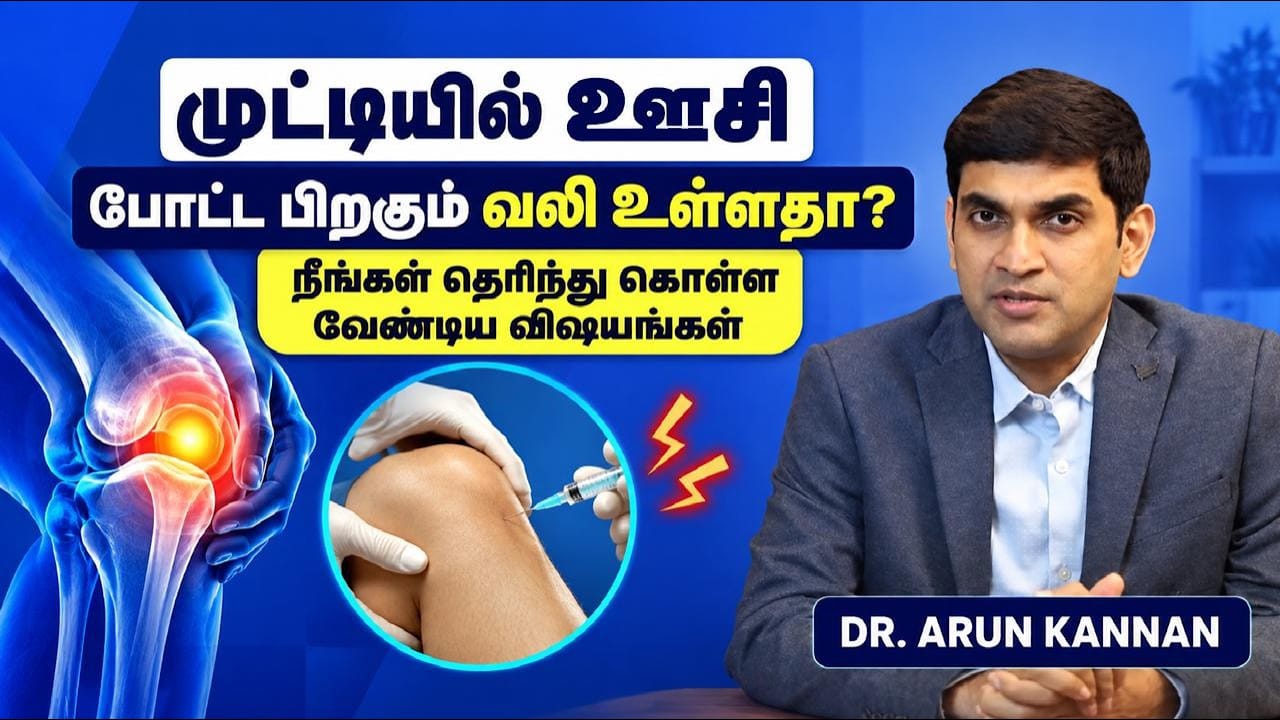
Knee Pain After an Injection: Why Does the Pain Come Back and What Should You Do Next?
Knee injections are commonly used as part of non-surgical treatment for knee osteoarthritis.
Many patients feel better after an injection and are able to walk more comfortably, exercise better and reduce their use of pain medicines.
But one question comes up again and again:
“Doctor, I had an injection in my knee. I felt better for a few months, but now the pain has come back. Does that mean the injection failed?”
Not necessarily.
This is one of the most important things to understand about injections for knee osteoarthritis:
Knee injections are generally used to reduce pain, stiffness and inflammation for a period of time. They are not a permanent cure for arthritis.
They do not reliably regrow lost cartilage, and they do not remove the mechanical load placed on an arthritic knee.
Their biggest value is often that they create a window of pain relief during which the patient can exercise better, strengthen the muscles, lose excess weight and modify activities that are overloading the joint.
In this article, Dr. Arun Kannan, Senior Consultant Orthopaedic Surgeon at Apollo Hospitals, Chennai and Jayam Ortho Care, Kodambakkam, explains why pain can return after a knee injection, the difference between steroid, PRP and hyaluronic-acid injections, who is most likely to benefit, and when repeated injections may no longer be the right solution.
What Is Knee Osteoarthritis?
Knee osteoarthritis is a condition in which the cartilage covering the surfaces of the knee gradually becomes thinner and damaged.
Cartilage is the smooth tissue that allows the bones within the joint to glide over each other with minimal friction.
As osteoarthritis progresses, patients may develop:
- Knee pain
- Stiffness
- Swelling
- Difficulty walking
- Pain while climbing stairs
- Difficulty getting up from a chair
- Difficulty squatting
- Reduced walking distance
- Grinding or creaking sensations
- Bow-leg or knock-knee deformity in advanced stages
Knee osteoarthritis becomes more common after the age of 50, although younger patients can also develop it.
Why Are Knee Injections Used?
There is no single treatment that can manage every aspect of knee osteoarthritis.
Treatment usually combines several approaches, including:
- Weight management
- Exercise
- Muscle strengthening
- Activity modification
- Pain-relief medication
- Topical treatments
- Physiotherapy
- Injections
- Surgery in advanced disease
Knee injections are usually used to reduce symptoms and improve function.
They may be considered when pain is interfering with exercise or daily activities despite simpler treatments.
What Types of Knee Injections Are Commonly Used?
Three commonly discussed types are:
Corticosteroid injections
PRP injections
Hyaluronic-acid or “gel” injections
They work differently, and none should be presented as a universal cure.
1. Steroid Injections for Knee Osteoarthritis
Corticosteroid injections are mainly used to reduce inflammation inside the knee.
They may be particularly useful when the joint is:
- Painful
- Inflamed
- Swollen
- Difficult to move
Some patients experience relatively rapid pain relief.
However, the benefit is generally temporary.
How Long Does a Steroid Injection Last?
There is no fixed duration.
Some patients experience improvement for only a few weeks, while others may feel better for several months.
The response depends on factors such as:
- Severity of arthritis
- Degree of inflammation
- Body weight
- Activity level
- Alignment of the knee
- Other medical conditions
Steroid injections should therefore be viewed as a short-term symptom-control option, not a treatment that restores the cartilage.
Can Steroid Injections Be Repeated?
Sometimes, but repeated injections should not be used casually.
The number and frequency should be decided by the treating orthopaedic surgeon based on:
- Stage of arthritis
- Previous response
- Diabetes
- Other medical conditions
- Overall treatment plan
For example, steroid injections can temporarily raise blood sugar in some people with diabetes.
2. What Is PRP Injection?
PRP stands for:
Platelet-Rich Plasma
PRP is prepared from the patient’s own blood.
A small amount of blood is collected and processed so that a portion containing a higher concentration of platelets is separated.
That preparation is then injected into the knee.
Platelets contain biological substances involved in tissue signalling and healing responses.
Does PRP Regrow Knee Cartilage?
This is a very important question.
At present, PRP should not be presented as a proven way to regrow severely lost cartilage or reverse advanced osteoarthritis.
Its main potential benefit is symptom improvement.
Some patients with mild to moderate osteoarthritis may experience:
- Reduced pain
- Reduced stiffness
- Improved function
for several months.
The response varies considerably between individuals.
Who May Benefit Most From PRP?
PRP tends to be considered more often in patients with:
- Mild osteoarthritis
- Moderate osteoarthritis
- Earlier Grade 3 disease in selected cases
It may be less predictable in advanced, bone-on-bone arthritis.
Age, weight, arthritis severity and knee alignment may all influence the result.
Why Doesn’t PRP Work for Everyone?
PRP is not one uniform product.
Its effect can vary because of:
- Severity of cartilage damage
- Preparation technique
- Platelet concentration
- Patient age
- Weight
- Inflammation
- Associated knee problems
Therefore, patients should have realistic expectations.
A good response means meaningful improvement in pain and function—not necessarily complete disappearance of symptoms.
3. What Is a Gel Injection?
Patients often refer to hyaluronic-acid injections as “gel injections.”
Hyaluronic acid is naturally present in joint fluid.
It contributes to the lubricating and shock-absorbing properties of the joint.
A concentrated preparation can be injected into the knee.
What Does a Gel Injection Do?
In selected patients, hyaluronic-acid injections may help improve:
- Pain
- Stiffness
- Joint movement
for a limited period.
The degree of benefit varies considerably.
Some patients report meaningful improvement, while others experience very little change.
Different professional guidelines also vary in how strongly they recommend routine use, so patient selection is important.
Does the Gel Replace the Lost Cartilage?
No.
A gel injection does not create new cartilage.
It should not be described as “filling up” the knee or permanently replacing worn cartilage.
Its purpose is symptom management.
Why Does the Pain Come Back After an Injection?
There are several possible reasons.
Reason 1: The Injection Was Never Intended to Be Permanent
This is the most common misunderstanding.
A patient may say:
“The injection worked for eight months, but now my pain is back. So the treatment failed.”
If the expected purpose was temporary symptom relief, then eight months of improved function may actually represent a useful response.
Knee osteoarthritis continues to exist even while symptoms are controlled.
When the effect of the injection gradually wears off, pain may return.
Reason 2: The Arthritis Has Progressed
Osteoarthritis is usually a progressive condition.
If the cartilage continues to wear over time, an injection that worked well two years ago may provide less benefit later.
This does not necessarily mean the injection itself has become ineffective.
The knee may simply have progressed to a more advanced stage.
Reason 3: Body Weight Has Not Been Addressed
Imagine injecting a painful knee but making no change to the load passing through it every day.
The injection may reduce symptoms.
But it does not reduce body weight.
An overweight patient continues to place greater mechanical stress across the knee with every:
- Step
- Stair
- Squat
- Sit-to-stand movement
That is why weight reduction can be particularly valuable in patients with knee osteoarthritis.
Why Weight Loss Matters So Much
Body weight is multiplied into greater forces across the knee during many daily activities.
Losing excess weight can reduce:
- Knee loading
- Pain
- Difficulty walking
- Stress during stairs
It may also improve:
- Blood sugar
- Blood pressure
- Cardiovascular fitness
If you are significantly overweight, the period of pain relief after an injection can be an excellent opportunity to work on gradual weight reduction.
Reason 4: Exercise Was Not Started
A painful knee often leads to inactivity.
But inactivity weakens the muscles around the knee.
Weak muscles then provide less support to the joint.
This can create a cycle:
Knee pain → less movement → muscle weakness → more joint stress → more pain
When an injection reduces pain, use that period to strengthen the muscles.
Which Muscles Should Be Strengthened?
The rehabilitation programme usually focuses on:
- Quadriceps
- Hamstrings
- Hip muscles
- Core and balance where appropriate
Stronger muscles can improve:
- Joint control
- Stability
- Walking
- Stair climbing
- Load distribution
The exact programme should be customised according to the patient’s condition.
Reason 5: The Patient Returned to High-Strain Activities
Pain relief after an injection can sometimes create false confidence.
A patient who previously avoided painful activities may suddenly start:
- Squatting repeatedly
- Sitting on the floor
- Climbing many flights of stairs
- Jogging
- Running
- Performing deep lunges
because the knee feels better.
But the injection has not made the underlying cartilage normal again.
If you repeatedly overload the joint, symptoms can return.
Pain Relief Does Not Mean the Arthritis Has Disappeared
This is perhaps the most important principle.
After an injection:
Less pain ≠ new cartilage.
Less stiffness ≠ cured arthritis.
Better walking ≠ a normal knee.
Use the symptom relief intelligently.
That means becoming more active—but not unnecessarily overloading the joint.
Which Activities Place More Stress on an Arthritic Knee?
Common high-load activities include:
- Deep squatting
- Sitting on the floor and repeatedly getting up
- Repeated stair climbing
- Running
- Jumping
- High-impact workouts
The degree of restriction depends on the stage of arthritis.
Not everyone must completely avoid these activities, but repeated painful loading is usually not helpful.
Is Walking Good After a Knee Injection?
Yes, walking can be useful.
However, the amount should depend on:
- Pain
- Swelling
- Arthritis severity
- Fitness
The goal is not to walk until the knee starts hurting badly.
Begin at a comfortable level and gradually increase.
If the knee becomes significantly swollen or painful afterward, the amount may be too much.
Is Cycling Better Than Running for Knee Arthritis?
For many patients:
Yes.
Stationary cycling can provide:
- Knee movement
- Muscle activation
- Cardiovascular exercise
with less impact than running or jogging.
This can make cycling a good exercise option for many people with knee osteoarthritis.
Does Cycling Regrow Cartilage?
No.
Cycling does not regenerate lost cartilage.
Its benefits come from:
- Maintaining movement
- Building muscles
- Improving fitness
- Helping weight control
rather than growing new joint cartilage.
Why Hip Strength Matters Too
The knee does not function in isolation.
Weakness in the hip muscles can affect:
- Leg alignment
- Balance
- Walking mechanics
A good rehabilitation programme often strengthens both the knee and hip muscles.
The Most Important Concept: Multimodal Treatment
Knee osteoarthritis should rarely be managed with a single treatment alone.
For example:
Injection alone
may provide temporary pain relief.
But:
Injection + exercise + weight control + activity modification
usually makes much more sense.
The injection becomes one part of a broader plan.
What Is Grade 2 Knee Osteoarthritis?
Grade 2 generally represents relatively early osteoarthritis.
There may be:
- Early cartilage wear
- Small bone-spur changes
- Mild to moderate symptoms
Non-surgical treatment often plays a major role at this stage.
What Is Grade 3 Osteoarthritis?
Grade 3 represents more significant joint damage.
Patients may have:
- More substantial cartilage loss
- Narrowing of the joint space
- Increased pain
- Reduced function
Some injections may still provide meaningful symptom relief in selected patients.
What Is Grade 4 Osteoarthritis?
Grade 4 is advanced osteoarthritis.
In part of the knee, the cartilage may be severely worn or essentially absent.
This may produce:
- Severe pain
- Limited walking
- Pain during routine activities
- Deformity
- Stiffness
Patients often describe this as bone-on-bone arthritis.
Why Do Injections Work Less Predictably in Grade 4 Arthritis?
Because the underlying structural damage is much greater.
If there is almost no cartilage remaining in the affected compartment, an injection cannot rebuild the joint.
It may sometimes provide temporary symptom relief, but the response is less predictable.
Therefore, repeatedly trying injections in severe Grade 4 arthritis may delay a more appropriate treatment without providing meaningful benefit.
“Should I Try One More Injection?”
This depends on the individual situation.
A repeat injection may sometimes be reasonable if:
- The previous injection gave good relief
- Symptoms are still manageable
- Arthritis is not advanced
- Surgery needs to be delayed temporarily for a valid reason
However, if:
- Arthritis is severe
- Walking is very limited
- Daily activities are difficult
- Pain is persistent
- Previous injections gave little or no benefit
then repeatedly trying the same treatment may not be the best strategy.
When Should Knee Replacement Be Considered?
Knee replacement is generally considered when:
- Arthritis is advanced
- Pain significantly affects daily life
- Walking distance is severely limited
- Sleep is affected
- Deformity is progressing
- Non-surgical treatment is no longer providing meaningful relief
The decision should not be based on X-rays alone.
The surgeon considers:
X-ray findings + pain + function + quality of life.
Should You Avoid Knee Replacement Because of Fear and Keep Taking Injections?
Fear is understandable.
But repeated injections should not become a way of indefinitely postponing surgery when:
- Arthritis is advanced
- Symptoms are severe
- Quality of life is poor
- Injections no longer help
At that stage, discussing knee replacement honestly may be more useful than continuing temporary treatments that provide little benefit.
What If the X-Ray Looks Mild but the Injection Did Not Help?
Sometimes symptoms and X-rays do not match perfectly.
If pain remains severe despite treatment, the orthopaedic surgeon may reassess the diagnosis.
Depending on the situation, further evaluation may include:
- Repeat examination
- Different X-ray views
- MRI in selected patients
This helps determine whether there is:
- More advanced cartilage damage
- Meniscus disease
- Bone problems
- Another cause of knee pain
Can an Injection Be Given Without Imaging?
Many knee injections can be performed accurately using anatomical landmarks.
In selected cases, ultrasound guidance may help improve placement or may be useful when the anatomy is difficult.
The need for image guidance varies.
What Should You Do Immediately After a Knee Injection?
Instructions depend on the injection used, but patients may generally be advised to:
- Avoid strenuous activity for a short period
- Monitor for increasing swelling
- Gradually resume exercise
- Follow rehabilitation advice
The treating doctor should provide specific instructions.
When Should You Call the Doctor After an Injection?
Seek medical attention if you develop:
- Severe worsening pain
- Fever
- Marked redness
- Hot, swollen knee
- Persistent severe swelling
- Inability to bear weight
Infection after an injection is uncommon, but it requires urgent assessment.
Frequently Asked Questions About Knee Injections
1. Why has my pain returned after a knee injection?
Because most injections provide temporary symptom relief rather than permanently curing osteoarthritis.
The effect can wear off over time.
2. Does pain returning mean the injection failed?
Not necessarily.
If you had meaningful pain relief for several months, the treatment may have provided the intended benefit.
3. Can a knee injection cure arthritis permanently?
No currently established knee injection reliably cures osteoarthritis permanently.
4. Can steroid injections regrow cartilage?
No.
Steroids mainly reduce inflammation and pain.
5. How long does a steroid injection work?
The duration varies greatly—from weeks to several months in different patients.
6. Is it safe to keep taking steroid injections?
Repeated injections should only be given after discussion with an orthopaedic surgeon.
They should not be used indefinitely without reassessing the knee.
7. Does PRP regrow cartilage?
There is currently no reliable evidence that PRP can restore advanced loss of cartilage to normal.
Its main role is symptom improvement in selected patients.
8. Does PRP work for everyone?
No.
Responses vary, and it tends to be less predictable in advanced osteoarthritis.
9. How long can PRP provide relief?
Some patients experience improvement lasting several months or longer.
There is no guaranteed duration.
10. How many PRP injections are needed?
Protocols vary.
Some clinicians use a single injection while others use a short series.
The decision should depend on the patient’s condition and the protocol being followed.
11. Is PRP better than steroid injection?
They have different purposes.
Steroids often provide faster anti-inflammatory relief.
PRP may provide longer symptom improvement in selected patients with mild to moderate disease.
No single option is best for every patient.
12. What is a gel injection?
It is usually a hyaluronic-acid injection placed into the knee joint.
13. Does the gel lubricate the knee?
Hyaluronic acid forms part of normal joint fluid, and injections may improve symptoms in some patients.
However, the effect is temporary and variable.
14. Does gel injection replace lost cartilage?
No.
15. Which injection is best for knee arthritis?
There is no universal answer.
The appropriate option depends on:
- Arthritis stage
- Swelling
- Age
- Weight
- Medical conditions
- Previous treatment response
16. Are injections better in Grade 2 arthritis?
In general, symptom-modifying injections tend to be more useful in mild to moderate disease than in end-stage arthritis.
17. Can injections work in Grade 4 arthritis?
They may sometimes provide temporary relief, but the response tends to be less predictable.
18. If I have Grade 4 arthritis, should I get PRP?
PRP is generally less likely to provide substantial or durable relief in advanced bone-on-bone arthritis.
Discuss realistic expectations before treatment.
19. Can I avoid knee replacement by repeatedly taking injections?
Injections may delay surgery in some patients by controlling symptoms.
But they cannot reliably prevent surgery indefinitely if arthritis progresses to a severe stage.
20. Should I lose weight before an injection?
If you are significantly overweight, weight reduction can improve overall knee management and may help extend the benefit of other treatments.
21. Can I start exercising after the injection?
Usually yes, after the short recovery period recommended by your doctor.
In fact, the period of improved pain can be a good opportunity to begin strengthening.
22. Which exercise is best?
Depending on the patient:
- Stationary cycling
- Quadriceps strengthening
- Hip strengthening
- Low-impact walking
- Water exercise
may be useful.
23. Should I avoid walking completely?
No.
Complete inactivity can contribute to muscle weakness.
The amount of walking should be adjusted according to pain and arthritis severity.
24. Can I jog after an injection if my pain is gone?
For someone with significant osteoarthritis, pain relief does not necessarily mean the knee is ready for high-impact exercise.
Lower-impact exercise is often preferable.
25. Can I climb stairs after an injection?
Normal necessary stair use is usually acceptable.
Repeated stair climbing as exercise may place unnecessary load on a painful arthritic knee.
26. Can I sit on the floor?
Deep knee bending can increase joint stress.
If it produces pain, reduce or avoid repeated floor sitting.
27. Will a knee cap make the injection last longer?
Not necessarily.
A knee sleeve may provide comfort or support, but it does not change the underlying cartilage damage.
28. What happens if the injection does not work at all?
The diagnosis and stage of arthritis should be reviewed.
Sometimes additional imaging or a different treatment approach is needed.
29. When is knee replacement better than another injection?
When advanced arthritis is causing substantial pain and disability despite appropriate non-surgical treatment, knee replacement may provide more meaningful long-term benefit.
30. What is the most important thing to understand about knee injections?
They are tools for symptom relief—not permanent cartilage-restoring treatments.
The best results usually come when the period of pain relief is used to:
- Reduce excess weight
- Strengthen the knee and hip muscles
- Exercise regularly
- Modify high-load activities
A Better Way to Think About Knee Injections
Instead of thinking:
“I had an injection, so my knee is fixed.”
Think:
“My pain is better. Now I have an opportunity to make the rest of my knee-treatment programme work.”
That means:
Strengthen the muscles.
Reduce excess weight.
Stay active.
Avoid unnecessary high-impact loading.
Follow up when symptoms change.
This approach gives injections a much more meaningful role.
Final Takeaway
Knee injections can be useful for osteoarthritis—but they need to be understood correctly.
Steroid injections mainly reduce inflammation.
PRP may improve pain and function in selected patients.
Hyaluronic-acid injections may provide symptom relief in some patients.
But:
None should be promised as a permanent cure.
None reliably regrows severely damaged cartilage.
None removes the mechanical load caused by excess body weight or high-strain activities.
If pain returns months after an injection, it does not automatically mean the treatment failed.
The more important questions are:
- How long did the relief last?
- Has the arthritis progressed?
- Was exercise started?
- Was weight controlled?
- Were high-strain activities reduced?
- Is the knee now at an advanced stage?
And if you already have severe Grade 4 arthritis with persistent pain and major difficulty in daily life, repeatedly chasing temporary injections may not be the best answer.
At that stage, an honest discussion about knee replacement may be more useful.
The goal is not simply to avoid surgery at any cost.
The goal is to choose the treatment that gives you the best combination of pain relief, mobility and quality of life.
Consult Dr. Arun Kannan
Dr. Arun Kannan
MS Ortho (AIIMS), FAOA (AUS), FARS (USA)
Senior Consultant Orthopaedic Surgeon
Knee, Hip, Joint Replacement & Sports Injury Surgeon
Apollo Hospitals
Greams Road
Chennai, Tamil Nadu
Jayam Ortho Care / Jayam Knee Clinic
4, 6th Cross Street
United India Colony
Kodambakkam
Chennai – 600024
Appointments
+91 93604 38720
044-24844718
044-24728875
Medical Disclaimer: This article is intended for general educational purposes only. The suitability of steroid, PRP or hyaluronic-acid injections depends on the stage of osteoarthritis, symptoms, examination findings, medical history and previous treatment response. No injection can be guaranteed to provide a specific duration of relief. Consult a qualified orthopaedic surgeon for an individual treatment plan.