

 10 April, 2026
Hip Fracture Surgery Care After Operation What to Watch For (Infection, Mobility, and Late Complications)
If you or a loved one has undergone hip fracture surgery in Chennai Location, recovery is not just about pain coming down. It is about preventing complications in the first few months, protecting weak bones, and planning the right type of surgery for the right fracture pattern.
Hip fracture is often triggered by a “simple” fall from standing height, especially in older adults. But the underlying issue is frequently osteoporosis, a silent condition that makes bones weak. The good news is that surgical care, correct implants, and strict follow up can greatly improve outcomes. The key is knowing what problems can happen, why they happen, and when to seek help immediately.
Why hip fractures happen in older adults
Hip fracture is commonly seen after low-velocity injury, such as a fall from standing height. In younger people, bones are usually strong enough to tolerate minor trauma. In older people, osteoporosis changes the situation.
Osteoporosis is often described as a general silent disease. The fracture may look like it happened suddenly due to a minor fall, but the real reason is that the bone was already weak.
Most hip fracture patients are around 60 years of age, and because the fracture occurs in the hip joint area, recovery affects walking, daily activities, and overall health.
The hip joint and why surgery must be planned carefully
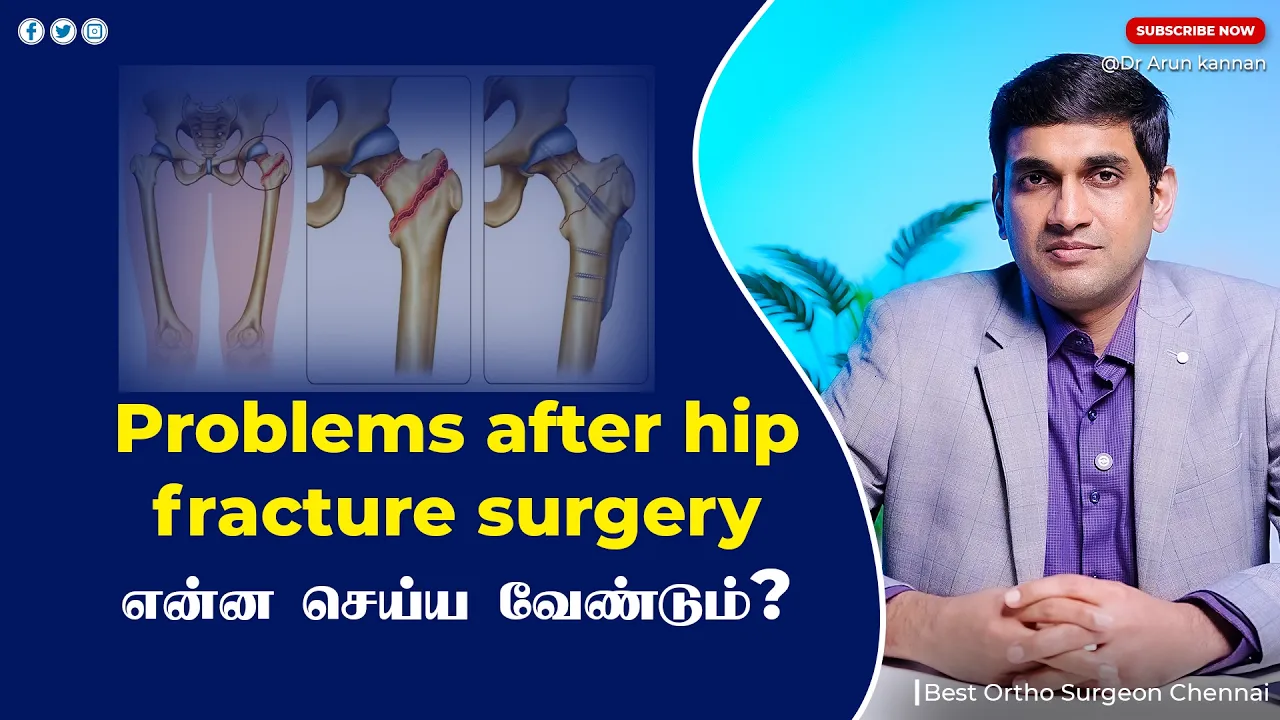
The hip is a ball-and-socket joint. When a fracture occurs, the surgeon’s goal is to restore stability so the patient can mobilize safely.
The plan depends on the fracture type and bone quality. Even with good surgery, hip fracture recovery has a unique challenge: these patients are often elderly with multiple health factors, so complications can occur.
Complications to know after hip fracture surgery
Let’s talk about the most important part. After hip fracture surgery, complications are usually grouped into early and late categories.
1) Early complications (first 2 to 3 months)
Early complications most commonly happen within 2 to 3 months. The key issues mentioned include:
- Infection after surgery
- Urine infection, which can become dangerous
- Chest or lung infection, especially when breathing and mobility are limited
These complications matter because they can delay healing, reduce mobility, and in some cases become serious. This is why early follow up and strict wound and health monitoring are essential.
The overall point is clear: surgery has benefits, but the risk is not zero. In the first three months, major complications can be possible, and the possibility of complications in this period can be more than 50%. That said, the transcript also emphasizes that outcomes after appropriate surgery can be much better, and the complication rate after surgery is much less when compared to not getting proper stabilization.
There is also a reality that even with correct surgery, the fracture may not heal perfectly in a small subset. The message given is that even after treatment, there remains a small residual risk, such as around 5% in certain cases for major complications. The exact outcome depends on patient selection and careful surgical technique.
2) Late complications
Late complications happen later, after the early healing phase. The transcript highlights problems such as implant and fixation-related issues, especially when the bone continues to be weak.
In simple terms, the implant may work, but osteoporosis can still challenge long-term stability. This is why long-term bone health management is not optional.
Infection prevention and why it can spread
Infection is mentioned as a key complication after hip fracture surgery. It includes infection at the surgical site as well as infections in other systems like the urinary tract and lungs.
When people become less mobile after surgery, it can affect breathing. Limited movement can increase the chance of lung infection. Meanwhile, dehydration, longer recovery time, catheter use in some cases, and general stress on the body can increase the risk of urine infection.
Because these problems can worsen quickly in older adults, the focus should be on:
- Keeping the surgical area clean and following wound care instructions
- Reporting fever, worsening pain, unusual discharge, or foul-smelling urine promptly
- Paying attention to breathing comfort and coughing as advised by the doctor
- Maintaining recommended hydration and nutrition (as permitted by the treating team)
Mobility is the ultimate goal of fracture surgery
One of the strongest messages is that the main goal of hip fracture surgery is to restore mobility. Many complications happen because patients do not move enough, and immobility itself can lead to chest infections, weakness, and slower recovery.
So the surgical strategy is often about achieving stability that allows safe movement. The therapist and surgeon plan the next steps, but the foundation is stability from the implant and proper healing.
What type of surgery is used: plate or nail vs hip replacement
Not every hip fracture needs the same operation. The transcript discusses two broad treatment approaches:
A) Plate or nail fixation
For many hip fractures, the surgeon uses a plate or a nail along with screws to hold the bone fragments in place while they heal.
The main aim is fracture stabilization in weak-bone situations. However, the transcript also notes a key nuance: implant failure percentage can be higher with plate-related approaches, which is why implant choice and fracture pattern matter.
The transcript also gives a practical sense of proportions: roughly 90% of patients may fall into the plate or nail group, and around 5% to 10% experience problems related to holding, comment-worthy fracture patterns, or later outcomes. (The exact phrasing in the transcript is unclear, but the intent is that most fractures are stabilized with fixation, and only a smaller portion end up needing additional management or have significant issues.)
B) Hip replacement (selected cases)
Hip replacement is considered when fixation is not the best option. The transcript emphasizes that hip replacement is not “the same as for other conditions.” It is a longer process and the surgery can be bigger, especially in the context of weak bones and specific fracture situations.
In selected fracture patterns or unstable situations, the surgeon may choose replacement. The transcript suggests that sometimes the replacement is done instead of plate fixation, especially when the fracture pattern is not suitable for stable fixation.
Why osteoporosis management is part of recovery
Here is where many people get confused. Hip fracture surgery deals with the broken bone right now. But osteoporosis is the reason it broke in the first place.
So treatment after surgery often includes:
- Calcium and vitamin D supplementation
- Sometimes bone injections or other osteoporosis therapies as advised by the treating doctor
The transcript clearly ties weak bones to recovery problems such as loosened implants or replacement needs later. In other words, bone health is not a side issue. It is central to preventing late complications.
Timing and follow up: the first months matter most
The transcript repeatedly points to the first 2 to 3 months as the critical period for early complications. That means follow-up schedules and home care instructions must be followed carefully during this time.
Also, the transcript highlights that while there is risk, surgery is still the main line of treatment for hip fractures in most cases. Even if the risk is not zero, the benefit of restoring stability and enabling mobility usually outweighs the dangers of not operating.
What complications suggest you should contact a doctor immediately
Because early complications can be dangerous, it helps to know “red flags” that should trigger medical attention. While your treating team may give a personalized list, the complications mentioned point toward common warning signs.
- High fever or chills after surgery
- Increasing redness, swelling, discharge, or worsening pain at the surgical area
- Burning during urination or signs of urine infection
- Cough, breathlessness, chest discomfort or signs of lung infection
- Rapid increase in weakness or inability to progress with mobility as advised
If any of these happen, do not wait. Seek advice from your orthopedics team or the nearest hospital.
Care essentials after discharge
Exact instructions vary by surgeon, implant type, and patient health. But the overall logic from the transcript remains consistent: prevent infection, protect breathing, and support mobility.
Practical care usually includes:
- Follow wound care instructions carefully
- Attend all follow-up visits and do scheduled checks
- Assist breathing exercises as prescribed to reduce lung infection risk
- Follow physiotherapy and mobilization plans to reduce stiffness and complications from immobility
- Take osteoporosis medications like calcium, vitamin D, and injections as advised
Quick summary: the “in a nutshell” message
To keep it simple, hip fracture surgery is a critical operation, especially for older adults with osteoporosis. The injury may happen after a minor fall, but the bone fragility makes complications possible.
The main goal of surgery is to stabilize the fracture (via plate or nail in most patients) so the patient can regain mobility. Infection, urine infection, and lung infection are early concerns in the first 2 to 3 months. Weak bone management with calcium, vitamin D, and sometimes injections helps reduce late problems like loosening or needing revision strategies.
Even though complication risks exist, proper surgical treatment and follow-up can significantly improve recovery outcomes.
FAQ
How soon after hip fracture surgery do complications usually occur?
Early complications are commonly considered in the first 2 to 3 months. Infection-related problems such as surgical site infection, urine infection, and lung infection are especially important during this period.
Is hip fracture surgery risk-free?
No. The transcript emphasizes that there is a significant risk period in the first three months and that even after successful surgery there is still a small residual risk of complications. However, surgery is still the main treatment because it stabilizes the fracture and supports mobility.
What is the main goal of plate or nail fixation?
The main goal is to stabilize the fracture in weak bones so the patient can mobilize safely and healing can occur.
When is hip replacement considered instead of plate or nail?
Hip replacement is typically for selected cases, such as certain unstable or unfavorable fracture patterns, where replacement may give better outcomes than fixation in weak bone.
Why is osteoporosis treatment important after surgery?
Because osteoporosis is the underlying reason for fractures. The transcript highlights that treatment may include calcium and vitamin D and sometimes bone injections. This helps reduce late complications like implant loosening or the need for further management.
Which infections should be watched for after hip fracture surgery?
The transcript mentions infection at the surgical site, urine infection, and lung/chest infection as key complications. If symptoms like fever, breathing issues, or urinary symptoms occur, contact a doctor promptly.
Where can patients in Chennai Location get guidance for hip fracture recovery?
You can seek orthopedic guidance at local clinics in Chennai Location. For example, Jayam Ortho Clinic in Kodambakkam, Chennai provides care related to hip surgery recovery. Call or WhatsApp: 93604 38720, Email: arunkannan.arun@gmail.com.