

 26 February, 2026
20 Years and Beyond: Why Modern Hip Replacements Last So Long
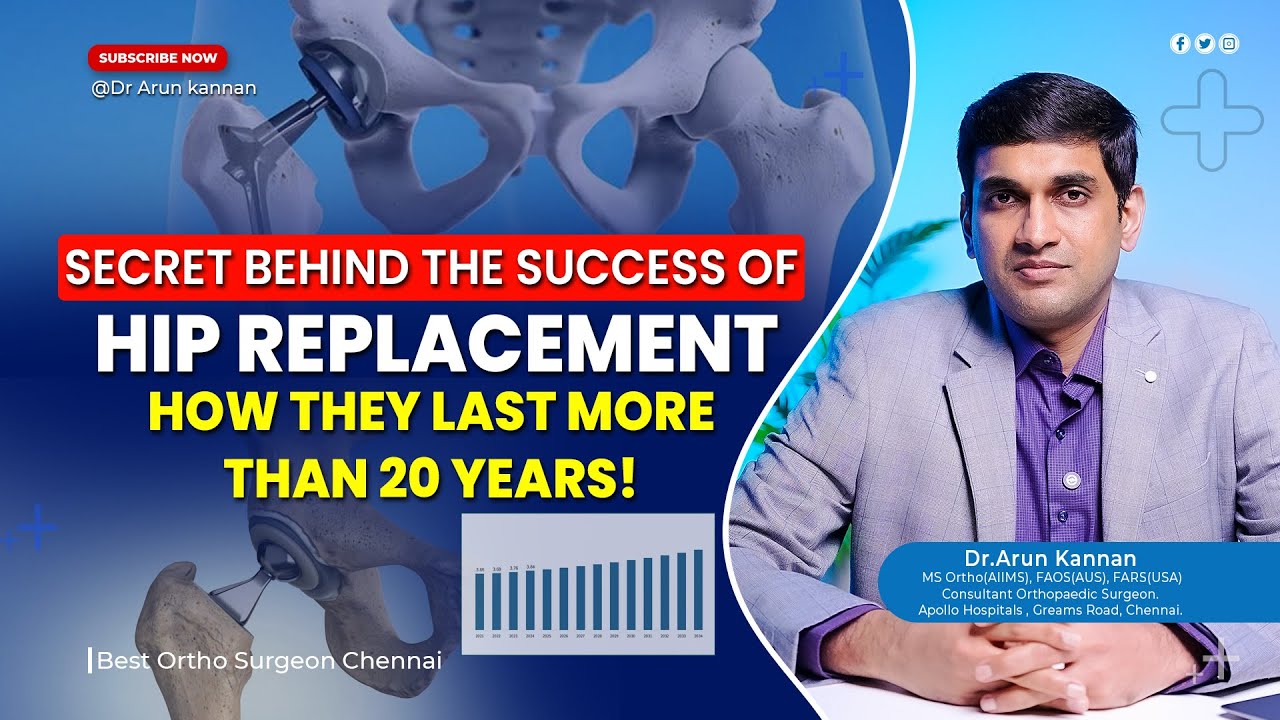
Hip replacement surgery has become one of orthopedics most reliable procedures. When done well, a modern hip implant can provide pain-free movement and function for two decades or more. Understanding why this is possible means looking beyond the operating room to implant materials, design, surgical accuracy, and patient care.
Quick overview: What determines how long a hip replacement lasts?
- Implant materials and surface technology — how implants bond to bone and resist wear.
- Bearing surfaces — the combination of materials that slide against each other inside the joint.
- Surgical technique and alignment — accurate placement reduces abnormal stresses.
- Patient factors and rehabilitation — activity, weight, bone quality, and follow-up care.
- Technological advances — better manufacturing, cross-linked polyethylene, ceramics, and robotic assistance.
How we reached the 20+ year benchmark
When hip replacement began in the 1960s and 1970s, early implants routinely lasted 10 to 15 years. Improvements over the decades have changed that. Registries that track outcomes show that with current implants and techniques, around 90% of patients still have well-functioning hips after 20 to 25 years. That remarkable improvement is the result of multiple, cumulative advances rather than a single breakthrough.
Implant design and the role of materials
Modern hip systems are composed of several parts: a stem that fits into the femur, a head that replaces the femoral head, a socket or cup that fits into the pelvis, and a liner inside the socket. Two key material trends support long life:
- Titanium stems with textured or porous surfaces — Titanium has strength similar to bone and excellent biocompatibility. When the stem surface is intentionally textured or coated to be porous, bone grows into those pores. This biological bonding is called osteointegration and turns the implant and bone into a single functional unit rather than two separate pieces.
- Improved cup designs and liners — The socket can be made of metal with a plastic or ceramic liner. Surface treatments on the cup improve initial stability and promote bone in-growth around the socket as well.
These material advances reduce micromotion, distribute load more naturally, and minimize loosening over time.
Bearing surfaces: Why wear used to be the problem
A major reason early hips failed sooner was wear. The plastic liners available decades ago produced wear particles as the metal head rubbed against polyethylene. Those particles triggered an inflammatory process in the bone around the implant called osteolysis. Over years, this bone loss loosened components and caused pain.
There have been three major improvements that dramatically reduced wear:
- Highly cross-linked polyethylene — Radiation and thermal processes alter the molecular structure of polyethylene, creating a highly cross-linked form that is far more wear resistant. Current liners produce far fewer particles.
- Ceramic heads and ceramic-on-ceramic bearings — Ceramics are extremely hard and smooth. When ceramic slides against polyethylene or ceramic, wear is very low compared with older metal heads. Ceramic alternatives also avoid metal ion concerns.
- Better sterilization and manufacturing — Modern production reduces impurities and improves consistency. Combined with improved sterilization techniques, the incidence of deterioration decreased dramatically.
Studies estimate that modern bearings and cross-linked polyethylene can reduce wear rates by an order of magnitude compared with older materials, which directly translates to longer implant survival.
Cemented versus uncemented fixation
Two broad strategies exist to fix the stem and cup in the bone:
- Cemented fixation — Polymethylmethacrylate cement creates an immediate mechanical bond between implant and bone. This remains useful, especially in older patients with weaker bone.
- Uncemented fixation — Porous or textured implants are press-fit and rely on bone growing into the surface for long-term fixation. This biological fixation often lasts longer in younger patients with good bone quality.
Both approaches can be durable. The key is selecting the right fixation method for the patient’s age, bone quality, and anatomy.
Surgical technique: alignment, balance, and precision
Even the best implant materials cannot compensate for poor positioning. Accurate placement of the cup and stem is critical to:
- Reduce abnormal contact forces that accelerate wear.
- Prevent impingement and instability that cause dislocation or edge loading.
- Ensure leg length and soft tissue balance so gait is natural and muscles work properly.
Surgeon experience and meticulous technique strongly influence long-term success. Even small deviations in cup angle or version can change how load passes through the bearing surfaces. That is why many centers track alignment and use intraoperative checks to minimize variation.
Robotics and navigation: minimizing variability
Robotic-assisted and computer-navigated systems help surgeons place implants very accurately and reproducibly. These tools plan the optimal component orientation and help execute that plan within millimeters and degrees, reducing the variability of manual placement.
Precise placement lowers the risk of early wear, dislocation, and uneven stress on the bone-implant interface. For younger, more active patients who demand a long-lasting solution, this surgical accuracy matters a lot.
Patient factors: what you can control
Implant longevity is not just about hardware and technique. Patient behavior and health status play a major role.
- Activity level — High-impact sports or repeated heavy loading will increase wear. Low-impact activities such as walking, swimming, cycling, and controlled gym work are safer for long-term function.
- Weight — Excess weight increases forces across the hip. Weight management reduces mechanical stress and prolongs implant life.
- Bone health — Good bone quality helps with osteointegration. Treating osteoporosis and maintaining calcium and vitamin D levels supports implant fixation.
- Follow-up and rehab — Proper rehabilitation strengthens muscles and restores gait mechanics. Regular follow-up detects issues early, allowing timely interventions before failure progresses.
Why younger patients sometimes need hip replacement
In many countries hip replacements are most common in people aged 65 to 75. However, certain conditions lead to earlier joint failure:
- Avascular necrosis — Loss of blood supply to the femoral head leads to collapse and severe pain in younger adults.
- Inflammatory arthropathies — Conditions such as ankylosing spondylitis or advanced rheumatoid arthritis can damage the hip early.
- Trauma and complex fractures — Severe injuries that cannot be reconstructed reliably may require replacement.
- Developmental problems — Some people have dysplasia or abnormal joint development that causes early arthritis.
For these patients, modern implants and careful planning aim to provide a durable solution despite their younger age. That said, longevity expectations require honest discussion: younger patients face a higher chance of needing a revision later in life simply because they will live longer with the implant and may place more demands on it.
Revision surgery: what happens when a hip reaches the end of its life?
No implant lasts forever. When an implant wears, loosens, or becomes infected, a revision surgery replaces part or all of the prosthesis. Revision techniques have improved and can often restore function, but revisions are typically more complex, carry higher risks, and may not last as long as the first implant.
This is why selecting the right implant, technique, and lifestyle counseling at the initial operation is so important. The goal is to delay or avoid revision for as long as possible.
What patients should expect and do after surgery
Successful long-term outcomes depend on a partnership between patient and surgical team. Practical steps that improve odds of 20+ year function include:
- Choose an experienced surgeon — Experience reduces variability in implant placement and decision making.
- Understand implant choices — Discuss bearing surfaces, cemented versus uncemented stem, and the rationale for the recommended implant.
- Follow rehabilitation plans — Muscle strengthening and gait training protect the joint and improve long-term mechanics.
- Maintain a healthy weight and low-impact activity — Protect the bearing surfaces by avoiding unnecessary heavy loads.
- Attend regular follow-up — Radiographic checks and clinical exams can catch early signs of wear or loosening.
Takeaway
Modern hip replacements can last 20 years or longer because multiple elements work together: advanced materials that resist wear, surfaces that integrate with bone, precise surgical placement, and patient-centered care. Continuous improvements in polyethylene, ceramics, implant surface technology, and surgical tools have dramatically cut the factors that caused early failure in the past. While young patients and high-demand lifestyles present additional challenges, careful planning, appropriate implant selection, and disciplined rehabilitation give the best chance for decades of pain-free movement.
Frequently Asked Questions
How likely is it that my hip replacement will still be working after 20 years?
Modern registry data and long-term studies indicate that roughly 85 to 95 percent of well-performed hip replacements remain functional at 20 years, depending on patient age and implant type. With current materials and surgical techniques, a 90 percent or greater chance of 20-year survivorship is common in many series.
What causes a hip implant to fail early?
Early failure usually stems from wear particles that cause bone loss, poor implant positioning leading to abnormal stresses or dislocation, infection, or inadequate fixation. Advances in materials and surgical accuracy have reduced these risks significantly.
Is ceramic better than metal for the hip head?
Ceramic heads are harder and smoother than metal, often producing less wear when paired with polyethylene liners and avoiding metal ion release. Ceramic-on-ceramic bearings have very low wear but require precise placement. The choice depends on patient factors and surgeon judgment.
Should I choose cemented or uncemented fixation?
Cemented fixation gives immediate stability and is often preferred in older patients with weaker bone. Uncemented fixation relies on bone growing into the implant and is commonly used in younger patients with good bone quality. The best choice depends on age, bone health, and specific anatomy.
Can a young person get a hip replacement that will last their lifetime?
While modern implants are much more durable, it is difficult to guarantee a lifetime solution for young patients because they typically place higher demands on the joint and have longer remaining life expectancy. The goal is to maximize the interval before revision becomes necessary by selecting appropriate implants and encouraging lifestyle measures that reduce wear.
How does rehabilitation affect long-term outcomes?
Proper rehabilitation strengthens the muscles that support the hip, corrects gait mechanics, and reduces abnormal loads on the implant. Patients who complete their rehab programs and maintain conditioning typically have better function and lower risk of complications that contribute to early failure.
Are robotic surgeries better than traditional surgeries for hip replacement?
Robotic-assisted and navigated procedures improve accuracy of implant positioning and reduce variability. That can lower the risk of early wear and dislocation. However, the surgeon’s expertise and postoperative care remain equally important for a successful long-term outcome.
How often should I have my hip checked after surgery?
Routine clinical and radiographic follow-up is typically scheduled initially at 6 weeks, 3 months, 6 months, and one year, then annually or every few years depending on symptoms and findings. Early detection of changes allows timely management before major problems develop.
Final note
Advances in implant materials, surface technology, and surgical technique have changed the expectations for hip replacement. For most patients, a well-chosen and well-placed modern hip implant provides durable, pain-free function for decades. Proper patient selection, realistic expectations, and ongoing care complete the picture for a successful long-term outcome.